What Warm Water Does to a Pool
Most of what goes wrong in pool water goes wrong faster when it is warm. Algae that would take a week to show in cool water can cloud a heated pool in days if the sanitizer dips. Biofilm, the slick layer that forms on walls and in corners, establishes itself sooner and shelters what grows beneath it. Chlorine is consumed faster, so the margin for a missed dose is thinner. And evaporation, which rises with temperature, leaves calcium behind at the surface.
Scrubbing is the mechanical half of the answer. Brushes break up film before it matures and wipe the scale line while it is still soft, and fine filters take out what the brushes loosen. The chemical half remains yours: a robot does not replace sanitizer, and it will not correct pH or hardness.
Covers, Spas and Smaller Heated Pools
Heated pools come with extra equipment, and each piece changes how you use a robot.
- Solar covers: take the cover fully off before a cycle. A robot that climbs to the surface has no room to work under a floating cover, and the cable can snag on it.
- Attached spas: robots are made for pool temperatures, not spa temperatures. Keep the robot out of a spa that is running hot.
- Temperature range: check your setpoint against the water temperatures in the robot's manual, especially if you keep the pool very warm. We do not quote a maximum.
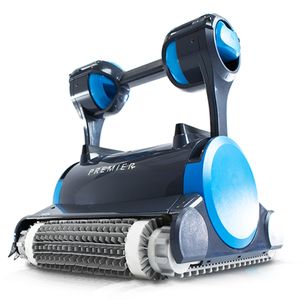
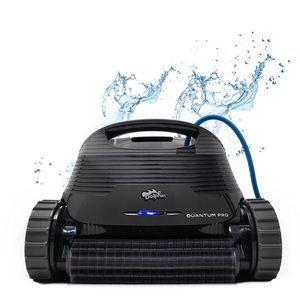
- Smaller heated pools: the Cayman and Escape are both suitable up to 33 ft. They clean floor and walls only, so the tile band is hand work, and of the two only the Cayman has a timer as standard, running every day.
Running a Robot in a Heated Pool
- Start at every 3 days in the cool shoulder months, every 2 days once the water is warm and every day at peak heat or heavy use. If walls feel slick between cycles, tighten it.
- When the pool is in daily use, add a waterline pass between full cycles if your robot has that mode. The oil line builds fastest then.
- Rinse fine filters at least weekly. In warm water a loaded filter left in the robot turns sour quickly.