When a Robot Is Worth It, and When It Is Not
We would rather say this than sell the wrong thing: for a small ring pool that goes up in June and comes down in August, a robot can cost more than the pool. A hand vacuum, a net and a few minutes are the sensible answer there.
The sums change with size and season. A large frame pool holds thousands of gallons, takes real money in chemicals to keep clear and, in a warm climate, may stand for five or six months. Its factory pump turns the water over slowly and never touches the floor. In that pool a robot is the main cleaning tool, and it moves with you if you later step up to a permanent above-ground pool, because both picks are rated for those too. If you cannot tell which side of the line you are on, the 30-day trial with no restocking fee exists for exactly that question.
Prepare the Floor Before the First Cycle
A thin liner shows everything beneath it, and so does a robot. Most trouble in soft-sided pools traces to the base, not the machine.
- Smooth the ground cloth and the liner floor as the pool fills. Wrinkles push out easily under a few inches of water and hardly at all once the pool is full.
- Clear stones, roots and sticks from the site before setup. A hard point under a thin floor is what damages a liner, with or without a robot.
- Watch the first cycle. If the robot hangs on a fold or tips into a hollow, note the spot and smooth or pad it at the next refill.
- Lift the ladder out for the cycle if the robot keeps nosing into its legs.
Depth and Flexible Walls: What to Expect
Two honest limits apply to any robot in this kind of pool. The first is depth. In a very shallow inflatable-ring pool a robot may not stay submerged, and one that breaks the surface draws air and stops. Check the minimum depth in the manual against your water level at its shallowest point, since lawns are rarely level.
The second is the walls. Both picks are floor-and-wall robots, but a soft wall bows under load, and that limits how high any robot climbs. Expect a clean floor and a clean lower wall. The upper wall and the scum line at the surface are a job for a soft cloth, and neither robot scrubs the waterline in any pool.
Cable and Power on the Lawn
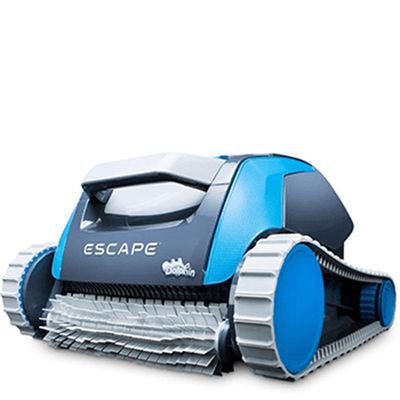
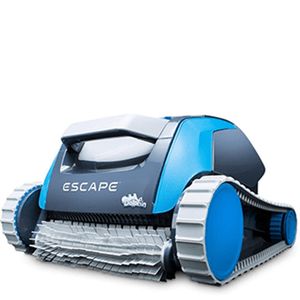
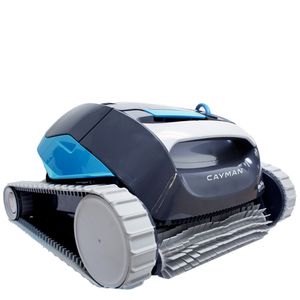
Measure before you order. The power supply has to stay back from the pool by the manual's stated distance, and from there the cable has to cross the wall and reach the far side. On round pools larger than about 24 ft, take that measurement before choosing the Escape and its 40 ft cable. The Cayman's 50 ft is the safer choice when the run is long. If the nearest outlet is still too far away, read what the manual says about extension cords before you use one.
Using a Robot in a Frame or Ring Pool
- Lower the robot in by its handle and let it sink by itself. Do not drop it onto a thin floor.
- Run it after the day's swimming, once sand and grass have settled, and empty the basket when it finishes.
- When you lift it out, rinse it and stand it in the shade, not on hot grass in full sun.
- At the end of the season, dry the robot fully and store it indoors before the pool comes down.