Black Friday SaleFree US shipping on every order
(888) 895-7080
Free Shipping Low Price Guarantee 30-Day Trial & Easy Returns
Free Shipping Low Price Guarantee Speak to a Pool Expert
Free 1–3 Day Shipping on Pool Robots Low Price Guarantee 30-Day Trial & Easy Returns

Buying Guide · Pool Type and Installation

Best Robotic Pool Cleaners for Cold Water: Openings, Closings and Unheated Pools

Cold water looks clean because nothing is growing yet. What sank over winter is still down there, and the weeks before it warms are the time to get it out.

By the SpectraLight pool experts · Updated November 2026

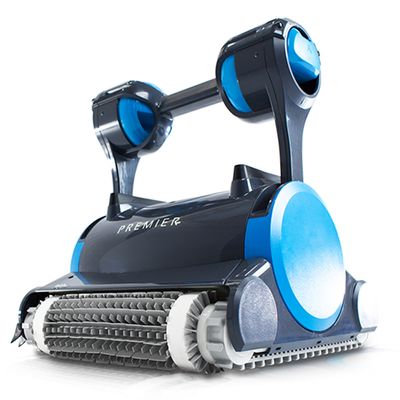
Dolphin Premier robotic pool cleaner

The Short Answer

For cold-water cleaning we pick the Dolphin Premier: openings and closings bring the heaviest debris of the year, and its oversized leaf bag takes that load before you switch to NanoFilters for the silt. The Dolphin Quantum is the runner-up, with an XXL basket and a lighter body to lift from a cold pool. First check the minimum operating water temperature in the manual. We will not guess it for you.

Nobody shops for a robot in cold water because they enjoy it. They are opening a pool in April, closing one in October, running an unheated pool through a northern spring, or wondering about a cold plunge. In each case the water is below swimming temperature and the job is bigger than usual: a winter's worth of leaves, silt and dead algae lies on the floor, and it has been steeping. The best robotic pool cleaner for cold water is the one with the capacity for that clean-up.

Cold keeps the mess quiet. Algae are sluggish, the water often looks clear, and it is tempting to wait. Then the first warm week arrives and everything on the floor becomes food. Capacity put the Premier and Quantum at the top of our list, with the Dolphin Sigma, Clear S and Dolphin Cayman after them.

Our Picks, in Order

Our Picks for Cold-Water Cleaning

Every price below is today’s price in our store.

  1. Pick 1: Leaf Bag First, NanoFilters After

    Dolphin Premier

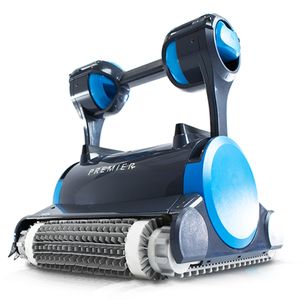
    An opening clean-up is two jobs, and the Premier has the media for both in its box. Start with the oversized leaf bag, which takes the matted leaves and husks that would bury a panel filter. Empty it, swap to NanoFilters in seconds through the top, and run again for the silt and dead algae. Two ProLine motors rated at 4,500 GPH work through a 3-hour cycle, and the full-filter indicator on its power supply signals when the bag has had enough. A 360-degree anti-tangle swivel on the 55 ft cable is welcome when that cable is cold and stiff.

    Best for
    Pools up to 50 ft that open to a floor of leaves and close under trees.
    Keep in mind
    At 20.3 lb plus a bag of wet leaves, it is a firm lift out of a cold pool.
    See the Dolphin Premier
  2. Pick 2: Largest Dolphin Basket, Lightest 50 Ft Dolphin

    Dolphin Quantum

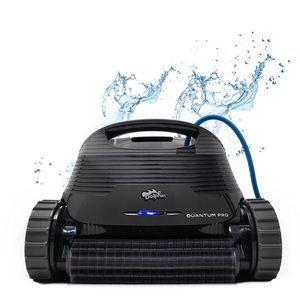
    The Quantum takes the opening load in a different container: an XXL MaxBin basket with over 400 sq in of filter area that opens from the top with one click. A rigid basket is quicker to dump and hose than a bag when your hands are cold, and the full set of NanoFilter panels in the box drops into the same basket for the polishing run. At 18.3 lb it is the lightest of the 50 ft Dolphins here, which you notice when lifting it out with a load aboard. Its app sends alerts over Wi-Fi, so you can wait indoors.

    Best for
    Owners who want quick emptying and a lighter lift at opening time.
    Keep in mind
    With no leaf bag, the very heaviest leaf mats may take an extra cycle. The warranty is 2 years.
    See the Dolphin Quantum
  3. Pick 3: Polisher for Silt and Dead Algae

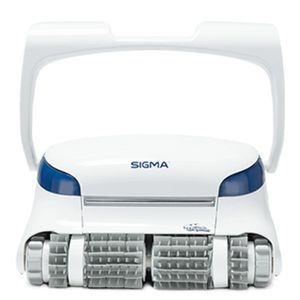
    Dolphin Sigma

    The Sigma is the specialist for what remains after the leaves are gone. Winter leaves a film of silt and dead algae on every surface, and its quad brushes and three commercial-grade motors lift it from floor, walls and waterline while the included NanoFilters hold it. The app flags a full filter, which happens fast in spring, and schedules the follow-up runs by day and time. We place it third because it filters through cartridges with no leaf bag, so net or rake out the bulk before its first cycle if the floor is carpeted.

    Best for
    Screened or tightly covered pools that open to fine sediment more than leaves.
    Keep in mind
    Cartridges fill fast under spring debris, and its 24.6 lb is the most of any Dolphin here to haul out of cold water.
    See the Dolphin Sigma
  4. Pick 4: Reads the Water Temperature for You

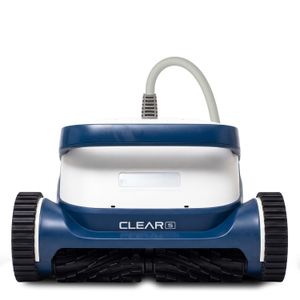
    Clear S

    Clear S answers the first cold-water question before you ask it: its app shows live pool temperature, so you can compare the reading with the range in the manual before you press start. Its UltraFilter basket carries 180-micron coarse panels for the opening debris and 1-micron fine panels for the polish. Ultra mode gives a 3-hour cycle for the first clean, and its gyroscope and accelerometer refine the route over the first 2 to 3 cycles. Clear backs it with a 3-year limited warranty.

    Best for
    Owners who want a temperature reading plus coarse and fine panels in one robot.
    Keep in mind
    Its rating is for in-ground residential pools. Clear UV, at a higher price, is this robot plus a built-in UV-C light controlled from the Clear app.
    See the Clear S
  5. Pick 5: For Smaller Pools That Open and Close

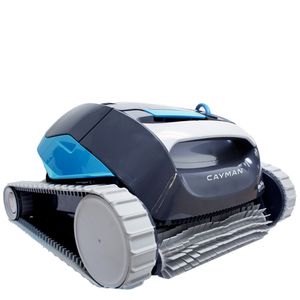
    Dolphin Cayman

    Seasonal pools of 33 ft or less, above-ground ones included, face the same spring floor on a smaller scale, and the Cayman is sized for them. Its MaxBin basket, 50% larger than standard Dolphin filters, has a one-tab top hatch that makes repeated dumping during an opening quick. No Dolphin on this page is lighter than its 14.6 lb. Give its cable extra care in the cold: it is 50 ft with no swivel, so uncoil it fully and warm it in the sun first. Add the optional NanoFilter panels for the fine pass.

    Best for
    Above-ground and smaller in-ground pools that are closed for winter each year.
    Keep in mind
    Floor and walls only, a single daily timer setting, and NanoFilter panels sold separately.
    See the Dolphin Cayman

What Matters

What Cold Water Asks of a Robot

01

The Manual's Minimum Temperature

Every robot has a minimum operating water temperature printed in its manual. It is not a number we will invent or round. Check it against a thermometer reading before the first run of the season, and wait if the water is colder than the robot is made for.

02

Capacity for the Opening Mess

What comes off a floor in spring is the bulkiest, wettest debris of the year: matted leaves, seed husks, worms, a layer of silt. A leaf bag or an extra-large basket lets the robot finish a cycle. A small fine filter stalls in minutes.

03

Fine Filtration for the Second Pass

Under the leaves is the material that actually clouds water once it warms: silt and dead algae as fine as flour. After the bulk is out, the robot needs ultra-fine media to polish, and it costs less when those filters come in the box.

04

A Cable That Copes With Cold

Cable jackets stiffen in the cold and hold the coils they were stored in. A stiff, coiled cable tugs the robot off course and tangles. A swivel helps, and so does laying the cable in the sun before use.

Side by Side

Cold-Water Picks Compared

Specification Dolphin Premier Dolphin Quantum Dolphin Sigma Clear S Dolphin Cayman
Price today $1949 $1599 $2349 $1749 $1049
Pool type In-ground In-ground In-ground In-ground In-ground and above-ground
Pool length Up to 50 ft Up to 50 ft Up to 50 ft Up to 50 ft Up to 33 ft
Cleans Floor, walls and waterline Floor, walls, waterline, sun shelves and stairs Floor, walls and waterline Floor, walls and waterline Floor and walls
Cable 55 ft with 360° anti-tangle swivel 55 ft with anti-tangle swivel 55 ft with 360° anti-tangle swivel 59 ft anti-tangle 50 ft
Filtration Multi-Media: NanoFilters, oversized leaf bag and standard fine filters XXL MaxBin basket with standard and NanoFilter panels NanoFilters and standard filter cartridges UltraFilter basket: 1-micron fine and 180-micron coarse panels MaxBin basket with fine panels; NanoFilter panels optional
Robot weight 20.3 lb 18.3 lb 24.6 lb — 14.6 lb
Warranty 3 years 2 years 3 years 3 years (limited) 2 years
Shop Buy the Dolphin Premier Buy the Dolphin Quantum Buy the Dolphin Sigma Buy the Clear S Buy the Dolphin Cayman

Clean It Cold, Before It Warms

Cold water hides its problems. Algae grow slowly in it, so a pool can sit over a layer of leaf sludge and still look blue from the deck. The trouble is stored, not absent. Leaves and silt hold nutrients, and the day the water warms, algae find a banquet already laid out. Pools that open cloudy or turn green in the first warm week are often pools that were cleaned late.

Getting the floor clean while the water is still cold, as soon as it is inside the robot's operating range, removes that fuel before anything can use it. It also means your opening shock works on the water instead of on a carpet of debris. Lift the robot out for that shock, and return it once chlorine is back at its usual level.

Temperature Limits: What We Can and Cannot Tell You

We are often asked for the coldest water a robot can run in. The honest answer is that the figure is in each model's manual, and we will not quote one from memory because the number matters. What we can tell you is how to use it.

  • Measure the water, not the air. A sunny spring afternoon can sit over water that is still winter-cold.
  • If the reading is below the manual's minimum, wait. Net what you can reach and run the robot when the pool catches up.
  • Never run a robot under ice, in slush, or in a pool that has been winterized.
  • A cold plunge chilled well below swimming temperature may be under the minimum too. Check before you buy.

Opening Day With a Robot

  1. Lay the cable out straight in the sun for an hour before the first cold run. A warm cable relaxes, a cold one keeps its coils.
  2. Rake or net out branches and the thickest leaf mats first. No robot is meant to swallow a winter's debris in one pass.
  3. Run coarse media first, then switch to the finest filters for a second cycle once the bulk is gone.
  4. Expect to empty the filter two or three times during an opening. That is normal, not a fault.

SpectraLight pool experts, Mon to Fri 8am to 5:30pm CST

Not sure which robot fits your pool?

Tell a SpectraLight pool expert your pool’s size, surface and what ends up in it, and get a straight answer before you buy.

Call (888) 895-7080

Cold-Water Questions

How cold is too cold to run a pool robot?

Colder than the minimum operating water temperature in its manual. Each model has one, and we do not quote it here. Measure the water with a thermometer, compare, and wait if the pool is below the line. It takes two minutes and protects the robot.

Should I use the robot before closing the pool for winter?

Yes, it is one of the most useful runs of the year. A fine-filter cycle right before the cover goes on leaves less debris to decay in the water over winter, which usually means an easier opening. Then take the robot out, rinse and dry it, and store it indoors. It never stays in a winterized pool.

Where should a pool robot be stored over winter?

Indoors, above freezing, dry and out of direct sun: a basement, heated garage or utility room. Drain it, rinse and dry the filters, and coil the cable in loose loops so it has less memory to fight in spring. An unheated shed is a risk in a hard climate, because water left inside can freeze. Bring the power supply in as well.

Will a robotic pool cleaner for cold water work in a cold plunge?

Usually not, for two reasons. A plunge kept far below swimming temperature may be under the robot's minimum operating temperature, which is in the manual. And most plunges are a few feet across, too small for a pool robot to move and turn. A hand vacuum and a brush are the right tools there.

The Verdict

The Cold-Water Decision

Cold water is clean-up season, so buy capacity. The Premier's leaf bag and NanoFilters handle an opening in two passes, and the Quantum's XXL basket does the same with an easier lift. Choose the Sigma if your pool opens to silt more than leaves, Clear S if you want the water temperature on your phone, and the Cayman for seasonal pools up to 33 ft. Whichever you own, the manual's minimum temperature decides the first day it runs, and a frost-free shelf is where it spends the winter.