What a Robot Removes at the Waterline, and What It Cannot
It helps to know what the ring is made of. The soft part is organic: oils, lotion, pollen and dust held together in a greasy film. Brushes shift that, especially when it is fresh. The hard part is mineral. As water evaporates at the surface, calcium is left behind and bonds to tile and plaster as a white or gray crust.
A robot removes film, not hardened calcium. Once scale has set, it takes a tile cleaner made for pools or a professional, along with a look at your calcium hardness and pH. Where a robot earns its keep is prevention: regular scrubbing takes away the oily layer that dust clings to. It also will not skim the surface. Floating oils that have not yet reached the wall belong to the skimmer.
Why the Cayman and Escape Are Not on This List
Both are capable floor-and-wall cleaners, and we recommend them often for pools up to 33 ft. But they are published as cleaning the floor and walls only. If the ring at the tile line is the reason you are shopping, neither will fix it, and you would be wiping the line by hand as before.
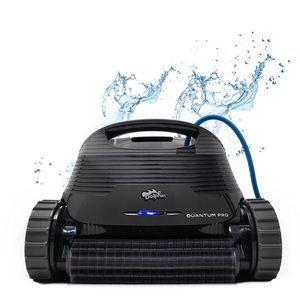
The step up is the Quantum. If your pool is above ground, where those two lighter robots are the right choice, plan on a soft cloth along the line every week or two. It takes a few minutes while the film is fresh.
Getting the Most From Waterline Scrubbing
- Keep the water level steady at about the middle of the skimmer opening. The robot scrubs where the water sits, so a level that wanders leaves a stripe above or below its path.
- Schedule cycles a few days apart in swim season. Film that is a few days old comes off; film that is a month old may not.
- Rinse the filter after cycles that follow heavy pool use. Sunscreen residue coats fine filter media and cuts the suction that holds the robot on the wall.
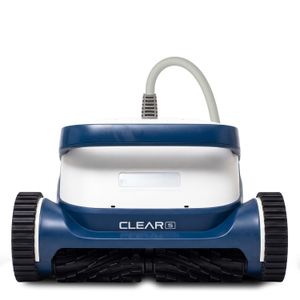
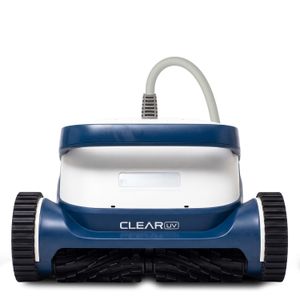
- With Clear S or Clear UV, run Waterline only the morning after a busy pool day, then return to the regular schedule.