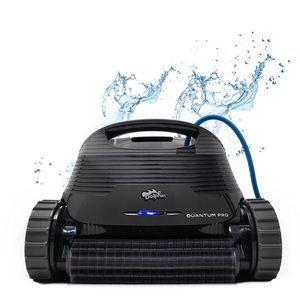
Why Fine Debris Shows More Indoors
Outdoors, wind ripples the surface and sunlight scatters, which hides a lot. Indoors the water lies flat under fixed lighting, often with underwater lights on in the evening, and suspended dust shows as a haze you can see down the length of the pool. Lint gathers as a pale bloom in the corners the returns do not reach.
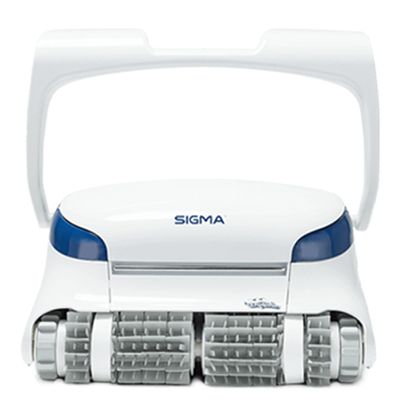
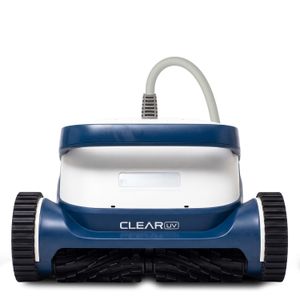
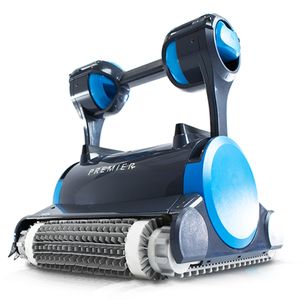
The pool's own filter catches some of this, slowly. A robot with ultra-fine media works where the material settles, lifting it off the floor and scrubbing the oily band before it bonds to the tile. What it will not do is deal with the air. A stuffy room and a sharp chlorine smell are ventilation and water-balance problems, and a clean floor does not fix them.
The Pool Room: Power, Parking and Covers
Being indoors changes the practical details more than it changes the cleaning.
- Power supply: give it a dry spot away from splash and wet floors, at the setback your manual specifies. Warm, humid air is hard on electronics, so keep it out of the chemical store.
- Parking: a robot on a timer or app schedule can wait in the water between cycles. When you lift it out for its weekly filter rinse, or between on-demand runs, stand it on a caddy instead of a wet floor. None of these robots includes one.
- Covers: if the pool has an automatic cover, the robot and its cable come out before the cover closes.
- Signal: test Wi-Fi where the power supply will sit before you rely on an app.
Indoor Routine That Keeps Water Glassy
- Leave the finest filters fitted all the time and rinse them at least weekly. Fine media loads up with lint sooner than it looks.
- Schedule cycles for the small hours, so the robot is finished and the water has settled before the first swim.
- If your robot has a waterline-only or one-hour mode, use it before guests arrive instead of waiting for the next full run.
- Ask swimmers to shower first. It is the cheapest way to shrink the oil line the robot has to scrub.