Where Your Chlorine Actually Goes
Free chlorine is spent in two ways: sunlight breaks it down, and contaminants use it up. The second part is where a robot earns its keep. Leaves, pollen, dead insects, algae film and the oils swimmers leave behind keep consuming chlorine for as long as they stay in the pool, and part of what results is the combined chlorine that gives a pool its sharp smell.
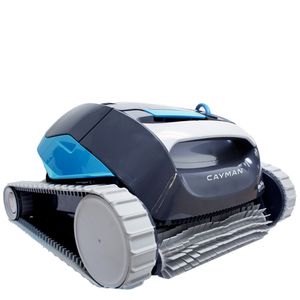
A robot on a schedule shortens that stay from days to hours. It does not sanitize anything, and you will still test and dose. But a pool that starts each day with a clean floor and scrubbed walls tends to hold its reading more steadily, and steady chlorine is what keeps water clear.
Tablets, Liquid or Cal-Hypo: What Each Means for the Robot
Once chlorine is dissolved and at a normal level, the robot does not care which kind you used. The differences are in how each product goes into the pool and what it leaves behind. High chlorine and low pH together are what age plastics, seals and brushes, so the rule in every row below is the same: concentrated chemical and robot never share the water.
Take the robot out before you shock, and put it back only when a test shows chlorine has returned to its normal range. Go by the test kit, not the clock.
Robot Habits for Chlorine Pool Owners
- Run the robot before you shock, not after. The dose then goes to work on the water instead of on leaves the robot could have removed.
- Unplug the power supply while the robot is out for a shock, so a scheduled cycle cannot start on the deck.
- Store the robot and its power supply away from your chlorine. Fumes in a closed shed are hard on everything.
- Test pH weekly. Water that drifts low is harder on brushes and plastics than chlorine at its proper level.