




Filter Fineness
Sunken pollen behaves like dust, not like leaves. A standard filter catches part of it and lets the rest through, which is why a pool can look worse an hour after cleaning. Look for ultra-fine media that comes with the robot.

Talk to a SpectraLight Expert
Real pool people, no scripts. Pick how you'd like to reach us.
Live chat
Fastest answer. Usually under a minute.
Call us
(888) 895-7080
Send a message
We reply by email, usually the same business day.
Browse on your own
FAQ Installation Compare models How UV works Replacement lamps Help & Support portalBuying Guide · Debris and Dirt Problems
Pollen season turns clear water hazy from the floor up, so we ranked five robots by how fine they filter and how easily they run every day.
By the SpectraLight pool experts · Updated November 2026
The Short Answer
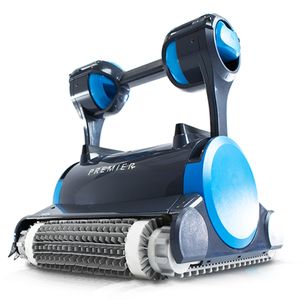
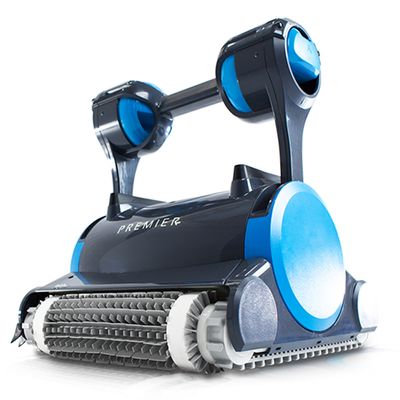
For pollen, we pick the Dolphin Premier: its included NanoFilters hold the fine yellow dust, its oversized leaf bag takes oak and pine catkins, and its power-supply timer runs a cycle every day without a phone. Choose the Clear S instead if you want 1-micron filter panels and phone scheduling, with a Waterline only mode for the yellow ring.
Pollen reaches a pool in two acts. First it floats, a yellow-green film that drifts toward the skimmer and paints a ring along the tile. Then the grains take on water and sink, and what settles is a dust so light that a swimmer's kick sends it back up as haze. The best robotic pool cleaner for pollen is the one whose filter is fine enough to keep that dust, because a standard panel passes much of it straight back into the water.
So this page is mostly about filter media, then about habit. All five picks include ultra-fine filtration in the box: NanoFilters on the Premier and Dolphin Sigma, NanoFilter panels on the Dolphin Quantum, and 1-micron panels on the Clear S and Clear UV. After that, the order comes down to daily scheduling, the yellow line at the water's edge, and the catkins that fall with the dust in oak and pine country.
Our Picks, in Order
Every price below is today’s price in our store.
Pick 1: Best for Dust and Catkins in One Robot
The Premier leads because pollen season is really two kinds of debris, and its Multi-Media system answers both from the box. The included NanoFilters hold the fine sunken dust, the oversized leaf bag takes catkins on the days the oaks let go, and either one swaps in seconds through the top with no tools. Its weekly timer is set on the power supply, so a cycle every day takes no phone, and a full-filter indicator there shows when the dust has loaded the media.
Pick 2: 1-Micron Panels and a Waterline Only Mode
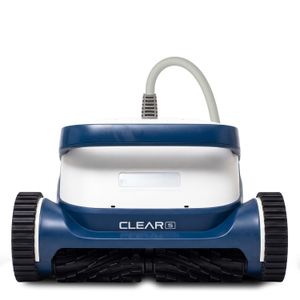
The Clear S takes second on filtration that is stated plainly: its UltraFilter basket carries 1-micron fine panels for the dust and 180-micron coarse panels for the heavier days. Two pump motors move 8,500+ GPH, the strongest flow of the picks here. In the Clear app you can set weekly schedules for a daily run, choose Waterline only to go after the yellow ring without a full cycle, or use the one-hour Fast mode for a pass between rinses.
Pick 3: The Same Fine Filtration, Plus a UV-C Light
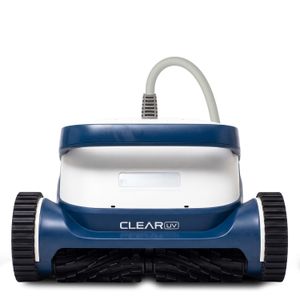
The Clear UV is the same robot as the Clear S: the same 1-micron and 180-micron panels, the same 8,500+ GPH and the same six cleaning modes. What it adds is a built-in UV-C light that you control from the Clear app, at a higher price. For pollen the filtering and scrubbing are identical between the two, which is why it sits one place behind. Its gyroscope and accelerometer tighten coverage after two or three cycles, which daily pollen runs supply quickly.
Pick 4: Quad Brushes and a Filter Alert on Your Phone
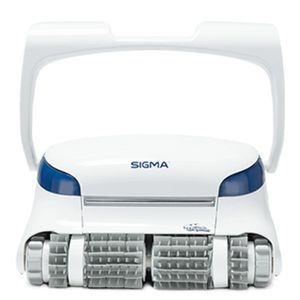
The Sigma includes NanoFilters alongside its standard cartridges, so the fine dust is covered from day one, and its quad scrubbing brushes work the film off walls and the waterline. Two features suit pollen weeks in particular: the myDolphin Plus app schedules cycles by day and time, and it sends a filter alert when the cartridges load, which pollen does to them fast. It ranks fourth because it is the highest-priced pick and its cartridges give catkins less room than a leaf bag or a large basket.
Pick 5: Big Basket, Fine Panels, Lower Price
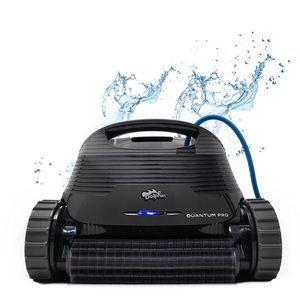
The Quantum closes the list because the robots above it add more, not because it filters pollen poorly. Its XXL MaxBin basket has over 400 square inches of filter area and comes with a full set of NanoFilter panels, so fine dust spreads across a large surface before the basket needs a rinse, and it lifts out the top with one click. The timer can run it every day, and it is the lowest-priced 50 ft robot in this guide.
What Matters
Sunken pollen behaves like dust, not like leaves. A standard filter catches part of it and lets the rest through, which is why a pool can look worse an hour after cleaning. Look for ultra-fine media that comes with the robot.
Pollen falls daily for weeks, and yesterday's layer is easier to lift before it packs into corners. A timer or a phone schedule turns that into a routine you do not have to remember. During the peak, plan on a daily cycle and a filter rinse after each one.
The floating share leaves a yellow-green line where water meets tile or liner, and the sun bakes it on. A robot that climbs and scrubs the waterline lifts that film before it sets. All five picks do, which is one reason the floor-and-wall robots sit outside this list.
Oaks and pines drop more than dust. Their catkins, the long tassels that carry the pollen, sink in tangles and can blanket a fine filter in minutes. That is a capacity problem: you want a leaf bag, coarse panels or a large basket to switch to.
Side by Side
| Specification | Dolphin Premier | Clear S | Clear UV | Dolphin Sigma | Dolphin Quantum |
|---|---|---|---|---|---|
| Price today | $1949 | $1749 | $1999 | $2349 | $1599 |
| Filtration | Multi-Media: NanoFilters, oversized leaf bag and standard fine filters | UltraFilter basket: 1-micron fine and 180-micron coarse panels | UltraFilter basket: 1-micron fine and 180-micron coarse panels | NanoFilters and standard filter cartridges | XXL MaxBin basket with standard and NanoFilter panels |
| Filter access | Top-load, no tools | — | — | Cartridges | Top-load, one-click open |
| Brushes | Dual scrubbing brushes | Front and rear active brushes | Front and rear active brushes | Quad scrubbing brushes | Dual HyperBrush |
| Flow rate | 4,500 GPH | 8,500+ GPH | 8,500+ GPH | 4,500 GPH | 4,000 GPH |
| Cycle time | 3 hours | 1, 2 or 3 hours (six modes) | 1, 2 or 3 hours (six modes) | 2.5 hours | 2 hours |
| Cleans | Floor, walls and waterline | Floor, walls and waterline | Floor, walls and waterline | Floor, walls and waterline | Floor, walls, waterline, sun shelves and stairs |
| Scheduling | Weekly timer: every day, every 2 days or every 3 days | Weekly schedules in the Clear app | Weekly schedules in the Clear app | Weekly scheduler by day and time | Weekly timer: every day, every 2 days or every 3 days |
| Warranty | 3 years | 3 years (limited) | 3 years (limited) | 3 years | 2 years |
| Shop | Buy the Dolphin Premier | Buy the Clear S | Buy the Clear UV | Buy the Dolphin Sigma | Buy the Dolphin Quantum |
Yellow dust on a pool floor sends many owners to the algaecide shelf, and often it is only pollen. Check before you treat.
Pollen collects wherever the water carries it: low spots, corners, the downwind end. Brush it and it lifts as a loose cloud, then settles somewhere new. Mustard algae holds to shaded walls and steps, brushes off just as easily, and then returns to the same patches because it is growing there.
If the dust keeps coming back to the same shaded spots after the trees have finished, treat it as algae, which is a chemistry job first. A robot helps with both, but it only solves the pollen.
Robots with a timer or a phone schedule are made to stay in the water between scheduled cycles, which is what makes a daily routine practical. During peak pollen, though, lift the robot out after each run and rinse the filter. Fine media caked yellow stops passing water, and pickup drops with it.
Some of the season is not the robot's job. The floating film belongs to the skimmer, and most robots do not reach top steps or shallow ledges, so plan on a quick hand brush there.
SpectraLight pool experts, Mon to Fri 8am to 5:30pm CST
Tell a SpectraLight pool expert your pool’s size, surface and what ends up in it, and get a straight answer before you buy.
Yes. Sunken pollen is too fine for standard filter media, so much of it passes through and clouds the water again. You need ultra-fine media: NanoFilters on the Premier and Sigma, NanoFilter panels on the Quantum, or the 1-micron panels on both Clear models. All of it comes in the box.
They will pick up sunken pollen once you add the NanoFilter panels, an optional add-on for both. Two limits kept them off this list: they clean the floor and walls but stop short of the waterline, where the yellow ring forms, and they are rated for pools up to 33 ft. For a smaller pool, a Dolphin Cayman with the fine panels and its every-day timer is a reasonable answer.
Because the vacuuming moved the pollen without keeping it. Dust that fine passes through coarse media and returns to the water. Let it settle, fit ultra-fine media and run the robot again. It often takes a few cycles, with a rinse between each, to get the water back.
Every day during the peak weeks. Pollen falls continuously, and a daily cycle lifts each layer before it packs down or gets tracked onto the steps. The Premier and Quantum timers have an every-day setting on the power supply. The Sigma and both Clear models take a daily schedule from their apps.
Mostly it looks bad, but it is organic matter, and organic matter left in warm water uses up chlorine and gives algae something to feed on. The yellow line at the waterline also gets harder to remove the longer it sits in the sun.
The Verdict
Choose by what falls in your yard. If dust and catkins arrive together, take the Premier for its NanoFilters and leaf bag. To run pollen season from your phone, take the Clear S, or the Clear UV if you also want its light. Pick the Sigma for quad brushes and the filter alert, and the Quantum for a big fine-filter basket at a lower price. Then: fine media in, a cycle every day, a rinse every time. Shop pool robots or chat with a pool expert.