Black Friday SaleFree US shipping on every order
(888) 895-7080
Free Shipping Low Price Guarantee 30-Day Trial & Easy Returns
Free Shipping Low Price Guarantee Speak to a Pool Expert
Free 1–3 Day Shipping on Pool Robots Low Price Guarantee 30-Day Trial & Easy Returns

Buying Guide · Commercial and Specialty Pools

Best Robotic Pool Cleaner for School Pools: Why 25 Yards Changes the Answer

A six-lane school pool is 75 ft long, and every robot here stops at 50. We explain what to buy instead, and which robots suit a smaller teaching pool.

By the SpectraLight pool experts · Updated November 2026

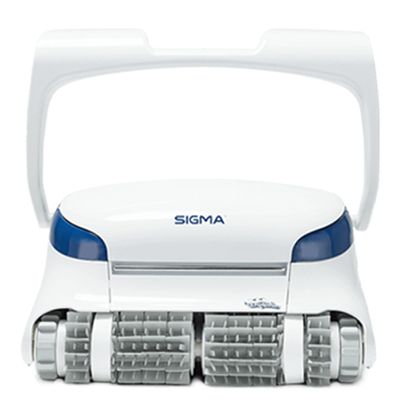
Dolphin Sigma robotic pool cleaner

The Short Answer

A 25-yard school pool needs a commercial-rated robot with a cable sized for 75 ft, and none of our picks qualifies. For a smaller teaching pool of 50 ft or less, we'd choose the Dolphin Sigma, whose scheduler can be set around the school timetable. The Dolphin Premier is the better choice when the custodian wants buttons on the power supply and nothing on a phone.

Before You Buy

A typical school pool is a 25-yard, six-lane pool about 75 x 45 ft, outside the 50 ft rating of every robot on this page. It needs a commercial-rated robot, and we do not present a residential one as the answer. The picks below are for smaller teaching pools of 50 ft or less, and they come with residential warranty terms.

The school pool works harder than its budget suggests. Physical-education classes cycle through all morning, the swim team trains before and after the bell, and a community group may rent the lanes at night. Deck dust, hair, lint from team suits and the odd hair tie settle on the floor between sessions, right where swimmers stare for an hour at a time: the black line.

The search for the best robotic pool cleaner for school pools usually starts from a 25-yard pool, and for that pool the answer is a commercial-rated robot. This page explains what to ask of one. If what you have is a smaller teaching pool, the kind built for lessons, then the Clear S and two Dolphins are worth your time, with the caveats spelled out.

Our Picks, in Order

For Teaching Pools of 50 Ft or Less Only

Every price below is today’s price in our store.

  1. Pick 1: Scheduled Around the School Timetable

    Dolphin Sigma

    A teaching pool runs on a timetable, and the Sigma is the one Dolphin on this page that schedules by day and time. Set it for 9 p.m. on school nights, leave the weekend alone, and the floor is clear before first period without anyone pressing start. The filter alert in the myDolphin Plus app tells the facilities office when the cartridges need rinsing. In the water it works with four scrubbing brushes, and its NanoFilters, described as filtering down to 2 microns, are fine enough for the lint and hair a class leaves. Steps, ladders and drain covers are on its published obstacle list.

    Best for
    Teaching pools up to 50 ft where facilities staff will manage an app.
    Keep in mind
    It needs a school-approved phone or tablet for the app, weighs 24.6 lb, and is sold on residential warranty terms.
    See the Dolphin Sigma
  2. Pick 2: Custodian-Ready: No Phone, No Login

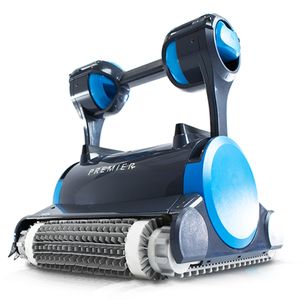
    Dolphin Premier

    Many districts restrict what can join the school network, and custodians should not need a personal phone to clean a pool. The Premier sidesteps both problems. Its controls are on the power supply, the weekly timer repeats every day, every 2 days or every 3 days, and an indicator shows when the filter is full. For an outdoor school pool that sat through summer break, the included oversized leaf bag clears the backlog before the NanoFilters go in for the term. It also lists L-shaped pools among its published shapes, which suits a teaching pool with a side bay. The warranty is 3 years.

    Best for
    Schools that want a routine a custodian can run with no device.
    Keep in mind
    Interval presets cannot follow a Monday-to-Friday timetable exactly, and the 3-hour cycle needs a long enough overnight gap.
    See the Dolphin Premier
  3. Pick 3: Live Water Temperature and a Floor Only Mode

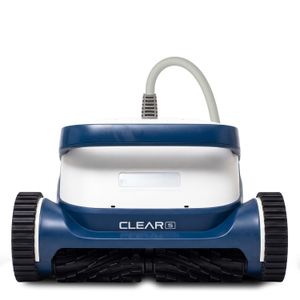
    Clear S

    Teaching pools are often kept warmer than lap pools, and the Clear app shows live pool temperature beside its weekly schedules, a small thing a facilities manager will use daily. The modes fit a school day: Regular in 2 hours overnight, Fast in 1 hour when an evening rental runs late, Floor only when the walls were done yesterday and the bottom just needs to be clear for lessons. Its published working depth, 2.5 to 16.4 ft, tells you up front whether a shallow teaching end is within range. A 1-micron fine panel and a 3-year limited warranty complete the case.

    Best for
    Warm teaching pools with a known shallow depth and an app-ready manager.
    Keep in mind
    Check the shallow end against the 2.5 ft minimum, and the pool's temperature against the limit in the manual.
    See the Clear S

What Matters

What a School Pool Needs From Its Robot

01

A Cable Sized for 75 Ft

A 25-yard pool is 75 ft long and about 45 ft wide. The cable has to cover that length plus the setback of the power supply from the pool edge. The 55 and 59 ft cables here fall well short, which is the plain reason these robots are out.

02

Done Between Last Practice and First Bell

Evening practice might end at eight and morning practice start at six. The cycle, the lift-out and the filter rinse all have to fit in that window, and the custodian's shift decides who starts it. Ask how long a full cycle takes for your pool's floor area.

03

Lane Lines Out of the Water

A robot's cable and floating lane lines do not mix: the cable snags, the robot stalls and coverage suffers. Lane lines come out, or get reeled to one side, before any robot goes in. Build that into the closing routine or the robot will sit unused.

04

A Caddy for the Custodian

One person, often at the end of a long shift, moves the robot from storage to the pool and back. A caddy turns that into a walk instead of a carry. None of the robots on this page includes one, so add a caddy to the quote.

Side by Side

Teaching Pool Picks Compared

Specification Dolphin Sigma Dolphin Premier Clear S
Price today $2349 $1949 $1749
Pool length Up to 50 ft Up to 50 ft Up to 50 ft
Cable 55 ft with 360° anti-tangle swivel 55 ft with 360° anti-tangle swivel 59 ft anti-tangle
Cycle time 2.5 hours 3 hours 1, 2 or 3 hours (six modes)
Filtration NanoFilters and standard filter cartridges Multi-Media: NanoFilters, oversized leaf bag and standard fine filters UltraFilter basket: 1-micron fine and 180-micron coarse panels
Scheduling Weekly scheduler by day and time Weekly timer: every day, every 2 days or every 3 days Weekly schedules in the Clear app
Robot weight 24.6 lb 20.3 lb —
Warranty 3 years 3 years 3 years (limited)
Shop Buy the Dolphin Sigma Buy the Dolphin Premier Buy the Clear S

The 25-Yard Pool: What to Buy Instead

For the six-lane pool most schools own, the purchase is a commercial-rated robot, and the specification is short. Its cable must reach both ends of a 75 ft pool from wherever the power supply sits. Its cycle must cover about 3,400 square feet of floor and finish inside your overnight window. Its filter must hold a day's lint and hair without clogging mid-cycle. It should come with a caddy and a warranty that names institutional use. If there is a diving well, the robot must be rated for that depth.

Chat with a pool expert with the pool's dimensions, depth and closing hours and we will help you work out the right class of machine. What we will not do is suggest running a 50 ft robot across half the pool. Partial coverage leaves a visible edge on the floor and a robot working outside its rating.

Teaching Pools: Five Checks Before You Order

Smaller pools built for lessons are where a residential robot can serve a school, provided five things check out.

  • Length. A longest straight run of 50 ft or less.
  • Depth. Teaching pools can be very shallow at one end. The Clear S lists a 2.5 ft minimum; the Dolphin manuals give theirs.
  • Temperature. Compare a warm-water pool with the maximum water temperature in the robot's manual before buying.
  • Fixtures. Ramps, handrails and lift bases are obstacles to watch during the first few cycles.
  • Warranty. School use may fall outside residential terms, so get that answered before the purchase order.

Making It Part of the Custodian's Checklist

Equipment survives in a school when it fits an existing checklist. Tie the robot to closing: lane lines reeled, deck doors locked, robot in, start. Tie the lift-out to opening: robot out, filter rinsed at the deck hose, robot back in the storage room before the first class arrives. Students should never be in the water with it, and the power supply should never be left where they can reach it.

Over school holidays, when the pool sits unused for weeks, store the robot dry and out of direct sun instead of leaving it in the water. Brushes and filters wear with daily use, so look them over each term.

Tips for a School Pool Routine

  1. Reel or remove lane lines first, every time. A cable caught on a lane line can stop a cycle partway through.
  2. After a long break, run the first cycle with the leaf bag or a coarse filter, then switch to fine media for the daily routine.
  3. Keep a paper log on the storage-room door: date, cycle run, filter rinsed, initials. It survives staff absences better than memory does.
  4. Take the robot out before chemical dosing or shocking, and tell the pool operator when it goes back in.


SpectraLight pool experts, Mon to Fri 8am to 5:30pm CST

Not sure which robot fits your pool?

Tell a SpectraLight pool expert your pool’s size, surface and what ends up in it, and get a straight answer before you buy.

Call (888) 895-7080

School Pool Robot Questions

Why can't a 50 ft robot clean a 25-yard school pool in two halves?

Because the rating describes the pool the robot is built to navigate, not a patch of floor. In a 75 ft pool the cable stops it short of the far end, so part of the floor is never reached, and someone would be moving the power supply nightly for a partial result. A commercial-rated robot does the whole pool in one cycle.

Do lane lines really have to come out before the robot goes in?

Yes, or at least be reeled to one side. A robot's cable trails across the water as the robot travels, and lane lines give it something to wrap around. The robot can stall or be pulled off its path, and the cycle ends with the floor half done. If the step is skipped, expect interrupted cycles.

Who should be responsible for the robot at a school?

One named role, usually the head custodian or the aquatics director, with a backup. That person starts it or checks the schedule, lifts it out, rinses the filter and reports problems. Coaches and students should not operate it. Clear ownership matters more than the model, because a robot with a full filter cleans very little.

Can the robot run during a free period when the pool is empty?

Only if the pool is closed and treated as closed. No one should be swimming while a robot is in the water, and the cycles here run from 1 to 3 hours, longer than a class period. Overnight is the practical window.

Which of your other robots should a school rule out?

The Cayman and Escape first: they are rated for pools up to 33 ft, clean floor and walls only, and are built for backyards. The Quantum is rated to 50 ft and could clean a teaching pool, but its warranty is a year shorter than our picks'. The Clear UV differs from the Clear S by a built-in UV-C light, run from the Clear app, and a higher price.

The Verdict

The Rule for Schools

Match the robot to the pool you have. The 25-yard pool gets a commercial-rated robot with a cable for 75 ft, a cycle that fits your nights and a caddy for the custodian; call us and we will help you specify it. The small teaching pool of 50 ft or less can use the Sigma if someone will own the app, the Premier if no one should need a phone, or the Clear S where temperature display and short modes help, each on residential warranty terms you have confirmed first.