Timing, Storage and Who Holds the Key
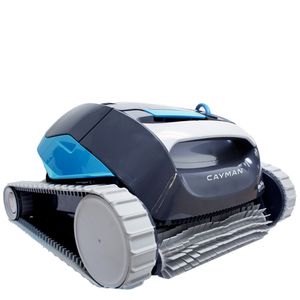
A robot on a shared pool is equipment, not a pool toy. Run it only when the pool is closed: no robot here should be in the water with swimmers, and a cable across the deck during open hours is in everyone's way.
The routine we recommend is in at closing, out before opening. Whoever locks the gate lowers the robot in and starts it. Whoever opens up lifts it out, empties the filter, and locks the robot and its power supply in a room or cabinet. A robot left on the deck of a large complex tends to get borrowed, dropped or ridden.
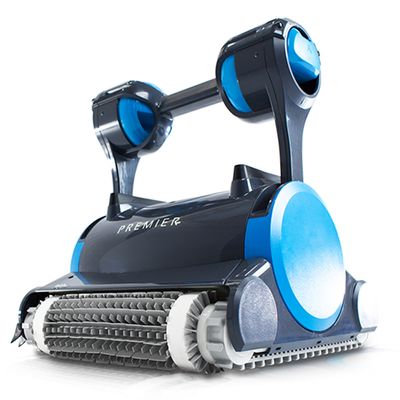
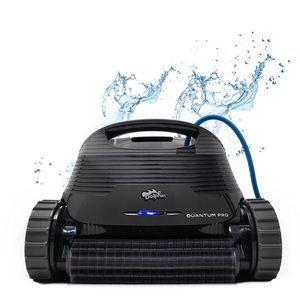
The timers still earn their place. If the pool is closed on set days each week, a Premier or Quantum can stay in the water through the closure and run on its own every day, every 2 days or every 3 days.
What a Robot Does Not Take Off the Property's List
A robot shortens the chores between service visits. It does not shorten the responsibilities. These stay on the schedule:
- Sanitizer and water balance. A robot removes debris and scrubs surfaces; it adds nothing to the water and does not test it.
- Skimming. Floating leaves and bugs belong to the skimmer until they sink.
- Top steps and very shallow ledges. Most robots do not clean them; the Quantum's published coverage of stairs and sun shelves is the exception here.
- Brushing during an algae treatment. Brush by hand, then let the robot collect what settles.
Setting Up the Routine at Your Property
- Pick cleaning nights from the calendar. Sunday night after the weekend crowd plus one midweek night is a sensible start; add nights in peak summer.
- Put the routine on one laminated card kept with the robot: lower it in, press start, lift it out, rinse the filter, lock it up.
- Rinse fine filters right after the run. Sunscreen residue loads fine media quickly and is harder to rinse once it dries.
- Take the robot out before shocking or adding chemicals, and tell the service company it is in use so their visit and your cycle do not collide.