How to Specify a Robot for a Competition Pool
If you are writing a specification or collecting quotes for a 25-yard, 25-meter or 50-meter pool, these are the lines to include. Bring us the pool's length, width, depth profile and closed hours and we will help you sort through the options: chat with a pool expert.
- Cable: 100 ft or more, checked against your pool's length and where the power supply will sit.
- Pattern: programmable for your dimensions, ideally lane by lane, with a cycle that finishes overnight.
- Filtration: capacity for a full day of team use, with fine media for sediment.
- Depth rating: at least your deepest point.
- Handling: a caddy, and a weight your staff can manage at the deck edge.
- Terms: a commercial warranty, a named service provider and realistic parts lead times.
Why Not Use a Home Robot in Part of the Pool
We get asked whether a 50 ft robot could at least handle the shallow end or the turn walls. Our answer is no. A robot's rating describes a whole pool it can navigate and reach by cable. Dropped into one section of a much larger pool, it has no wall on the open side to turn it back and a cable that limits where it can go. The result is an irregular patch of clean floor in a pool where a uniform floor is the point.
It would also be working outside its rating in an institutional setting, which a residential warranty is not written for.
Home Lap Pools: Getting the Setup Right
For a lap pool at home, setup matters more than model. The length rating applies to the longest straight run, so a 45 or 50 ft lane is within range of all three picks. Cable reach is the separate check. Put the power supply near the middle of the long side, not at one end, so the cable can follow the robot to both walls. As an example only, a power supply sitting roughly 12 ft back from the edge leaves a 55 ft cable about 43 ft to work with; use the setback in your own manual.
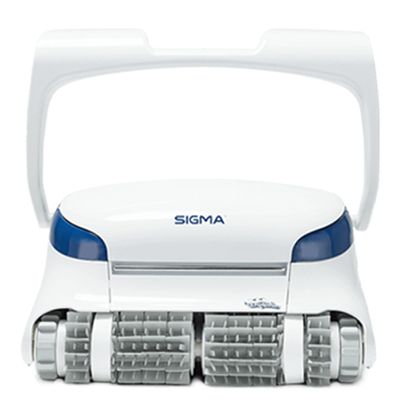
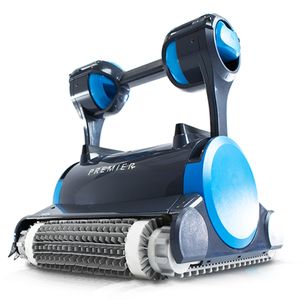
Narrow pools give a cable less room to spread, so the 360-degree swivel on the Sigma and Premier earns its keep. If you swim against a current machine, switch it off while the robot runs.
Setup Tips for a Home Training Pool
- Pull lane ropes, tethers and resistance gear out of the water before each cycle. A cable will find them.
- Run fine filters for the daily routine and rinse them after each cycle, because fine media loads quickly and a loaded filter passes less water.
- Set the cycle to end well before you swim, so anything stirred up has time to settle or reach the pool's own filter.
- Lift the robot out before shocking or adding chemicals, and store it out of direct sun when the pool will sit unused for a long stretch.