Black Friday SaleFree US shipping on every order
(888) 895-7080
Free Shipping Low Price Guarantee 30-Day Trial & Easy Returns
Free Shipping Low Price Guarantee Speak to a Pool Expert
Free 1–3 Day Shipping on Pool Robots Low Price Guarantee 30-Day Trial & Easy Returns

Buying Guide · Pool Surface

Best Robotic Pool Cleaner for Painted Pools That Chalk and Cloud

Old pool paint sheds a fine white powder that slips through ordinary filters, so on a painted pool the filter matters more than anything else.

By the SpectraLight pool experts · Updated November 2026

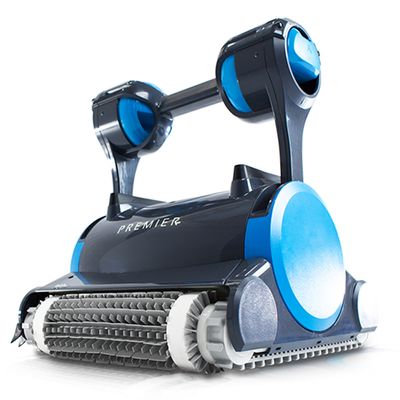
Dolphin Premier robotic pool cleaner

The Short Answer

Choose the Dolphin Premier for a painted pool. Chalking paint needs ultra-fine filtration, and the Premier includes NanoFilters alongside standard fine filters, swapped in seconds from the top. The Dolphin Sigma is the runner-up: it also includes NanoFilters, adds two more brushes, and its app tells you when the filter needs rinsing, which on a chalking pool is after every cycle.

Rub your palm along the wall below the waterline. If it comes away white, your paint is chalking, and you have found the reason the water never looks quite clear. The best robotic pool cleaner for painted pools is chosen almost entirely for how it deals with that powder. Epoxy, acrylic and rubber-base paints over concrete or plaster all break down this way as they age, shedding pigment and binder as a fine dust.

That dust is too fine for a standard filter. It passes through, hangs in the water as a milky haze, settles overnight and rises again with the first swimmer. A robot with ultra-fine media takes it out for good, a little each cycle. Our ranking follows the filters: the Clear S, the Dolphin Quantum and the Dolphin Cayman come after the two leaders.

Our Picks, in Order

Our Picks for Painted Pools

Every price below is today’s price in our store.

  1. Pick 1: Fine and Standard Filters, Both in the Box

    Dolphin Premier

    A painted pool asks you to change filters with the paint's mood, and the Premier makes that painless. Run the NanoFilters while the surface is chalking and the water is hazy. Drop in the standard fine filters, or the oversized leaf bag, on a week when flakes are coming off, so the fine media are not buried. Every option is included and loads from the top in seconds, no tools. A full-filter indicator on the power supply tells you when to rinse.

    Best for
    Chalking painted pools up to 50 ft, and owners who would rather not manage a robot from a phone.
    Keep in mind
    No app. On a heavily chalking pool the NanoFilters need rinsing after every cycle, which no robot spares you.
    See the Dolphin Premier
  2. Pick 2: NanoFilters Plus a Rinse Reminder on Your Phone

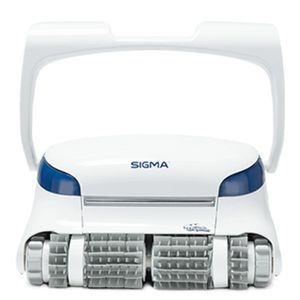
    Dolphin Sigma

    The Sigma matches the Premier on the feature that matters most here, with NanoFilters and standard cartridges both included, then adds scrubbing: quad brushes lift the chalk layer from the floor, walls and waterline in a single 2.5-hour cycle. Its best trick for a painted pool is the filter alert in the myDolphin Plus app. Chalk loads a fine filter faster than ordinary dirt, and a prompt on your phone takes the guesswork out of when to rinse.

    Best for
    Painted pools with a heavy chalk film on the walls, and owners who like app alerts and scheduling.
    Keep in mind
    The highest-priced pick here, and it has no coarse leaf bag for weeks when paint chips are the main debris.
    See the Dolphin Sigma
  3. Pick 3: 1-Micron Panels for the Finest Chalk

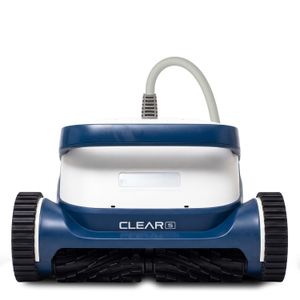
    Clear S

    Paint chalk is among the finest material a pool produces, and the Clear S meets it with 1-micron fine panels in its UltraFilter basket. Swap to the 180-micron coarse panels when chips are coming off. Two pump motors move 8,500+ GPH, so a great deal of hazy water passes through those panels each cycle, and front and rear active scrubbing brushes loosen the film on floor, walls and waterline. Weekly schedules run from the Clear app.

    Best for
    In-ground painted pools where a persistent milky haze is the main complaint.
    Keep in mind
    Panels this fine load quickly with chalk, so rinse after each cycle. Confirm painted surfaces against its manual first.
    See the Clear S
  4. Pick 4: Big Basket, Fine Panels, Smaller Price

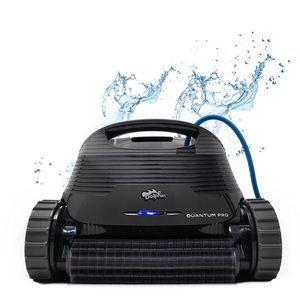
    Dolphin Quantum

    The Quantum brings included NanoFilter panels to a lower price than the robots above it, and pairs them with the largest Dolphin basket here: the XXL MaxBin, with over 400 square inches of filter area. More filter area helps on a chalking pool because powder takes longer to choke the flow. The basket opens from the top with one click for the after-cycle rinse, and the dual HyperBrush spins at twice the speed of standard brushes to lift the chalk film.

    Best for
    Painted pools up to 50 ft where budget matters and fine filtration cannot be skipped.
    Keep in mind
    A 2-year warranty, and a 2-hour cycle that you may want to run daily while the paint is chalking heavily.
    See the Dolphin Quantum
  5. Pick 5: Small Painted Pools, With One Add-On

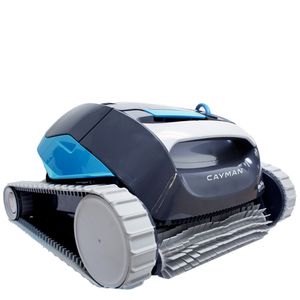
    Dolphin Cayman

    On a painted pool of 33 ft or less, the Cayman does the scrubbing well: a HyperBrush at twice the speed of standard Dolphin brushes on floor and walls, over 4,000 GPH of flow, and a timer that runs a cycle every day, the right rhythm for a surface that sheds powder constantly. The catch is filtration. Its MaxBin basket ships with fine panels, and the NanoFilter panels that chalk calls for are an optional add-on. Buy them with the robot.

    Best for
    Small painted pools, in-ground or above-ground, whose owners will add the NanoFilter panels.
    Keep in mind
    Without the NanoFilter add-on it will pass much of the chalk. It also leaves the waterline to you.
    See the Dolphin Cayman

What Matters

What a Painted Pool Asks of a Robot

01

Ultra-Fine Filtration, Included

This is the deciding feature. The Premier and Sigma include NanoFilters, the Quantum includes NanoFilter panels, and the Clear S includes 1-micron panels. On the Cayman and Escape, NanoFilter panels are an optional add-on, so price them in.

02

Filters You Will Not Mind Rinsing

On a chalking pool, fine filters need a rinse after every cycle. Access matters when you do something that often. The Premier and Quantum load from the top, and the Cayman empties through a top hatch. The Sigma uses cartridges.

03

Brushing That Lifts Chalk

Scrubbing loosens the chalk layer so the filter can take it. Robot brushes are soft and will not strip sound paint. Where paint is already blistered or flaking, any brush, including a hand brush, will knock the loose pieces off.

04

Room for Flakes

Failing paint comes off in chips as well as powder. Chips fill a fine filter fast, so it helps to have a coarse option: the Premier's standard filters or leaf bag, the standard panels on the Quantum, the 180-micron panels on the Clear S.

Side by Side

Painted Pool Robots Compared

Specification Dolphin Premier Dolphin Sigma Clear S Dolphin Quantum Dolphin Cayman
Price today $1949 $2349 $1749 $1599 $1049
Brushes Dual scrubbing brushes Quad scrubbing brushes Front and rear active brushes Dual HyperBrush HyperBrush
Cleans Floor, walls and waterline Floor, walls and waterline Floor, walls and waterline Floor, walls, waterline, sun shelves and stairs Floor and walls
Traction HyperGrip tracks HyperGrip tracks — HyperGrip tracks HyperGrip tracks
Pool length Up to 50 ft Up to 50 ft Up to 50 ft Up to 50 ft Up to 33 ft
Filtration Multi-Media: NanoFilters, oversized leaf bag and standard fine filters NanoFilters and standard filter cartridges UltraFilter basket: 1-micron fine and 180-micron coarse panels XXL MaxBin basket with standard and NanoFilter panels MaxBin basket with fine panels; NanoFilter panels optional
Robot weight 20.3 lb 24.6 lb — 18.3 lb 14.6 lb
Warranty 3 years 3 years 3 years (limited) 2 years 2 years
Shop Buy the Dolphin Premier Buy the Dolphin Sigma Buy the Clear S Buy the Dolphin Quantum Buy the Dolphin Cayman

Chalk, Chips and Blisters: What the Robot Does With Each

Paint fails in three ways, and a robot's part differs for each. For flaking and blistering, the real answer is to repaint, with the surface prepared properly first. Until then, a robot keeps the debris out of the water and off the floor, which is worth doing, but treat it as housekeeping and not a cure. Here is how the three look from the deck:

  • Chalking: a fine powder you can wipe off with a hand. This is normal aging, and a robot with ultra-fine filters manages it cycle after cycle.
  • Flaking: chips lifting from the surface. The robot will collect them, and they will keep coming until the loose paint is gone.
  • Blistering: bubbles under the paint film. Brushes may break them open. The robot gathers the pieces but cannot fix what caused them.

Rinsing Fine Filters on a Chalking Pool

Chalk packs into ultra-fine media quickly. A filter that looks pale gray after a cycle is doing its job, and it also needs cleaning before the next one. Rinse it after every cycle while the pool is chalking: hose from the clean side outward until the water runs clear, and do not let the powder dry into a crust. A loaded filter restricts flow, and you will see it as a robot that cleans less and climbs less. Expect the first cycles to be the heaviest, as the robot works through powder that has been building up.

Paint Type and What Lies Under It

Epoxy, acrylic and rubber-base paints all chalk; epoxy generally holds up longest and acrylic the shortest, and all of them go faster in strong sun and unbalanced water. No robot publishes paint as a surface. What the lists name is the material beneath: the Premier, Sigma and Cayman list concrete and plaster, and the Quantum lists plaster and gunite. After repainting, keep the robot out until the paint maker's full cure time has passed. Fresh paint is soft, and a cycle run too soon can mark it.

Running a Robot in a Chalking Pool

  1. Do the palm test on a wall below the waterline; white residue means fit the ultra-fine filters before the first cycle.
  2. Rinse the fine filters after every cycle, hosing from the clean side until the runoff is clear.
  3. Switch to standard or coarse media on days when chips, leaves or other large debris are in the pool.
  4. Time cycles for early morning, when overnight settling has put the chalk on the floor where the robot can reach it.


SpectraLight pool experts, Mon to Fri 8am to 5:30pm CST

Not sure which robot fits your pool?

Tell a SpectraLight pool expert your pool’s size, surface and what ends up in it, and get a straight answer before you buy.

Call (888) 895-7080

Painted Pool Questions

Why does my painted pool turn cloudy after people swim?

Swimmers stir up paint chalk. The powder settles on the floor and clings loosely to the walls when the water is still, then lifts into suspension when it is disturbed. Because it is finer than a standard filter can hold, it circulates until something with ultra-fine media removes it.

Will a robotic pool cleaner for painted pools peel the paint?

Not paint that is sound. The brushes are soft and are meant for finished pool surfaces. Paint that has already lost its bond will come off under any brushing, a robot's included, and the chips end up in the filter. Consider that an early warning that the coating is due for renewal.

How soon after repainting can a robot go back in?

After the paint has fully cured, by the paint maker's schedule. Cure times vary by paint type and weather, so we will not put a number on it. Until then the film is soft. Follow the can, and if in doubt wait longer.

Does chalking mean I have to repaint now?

Not necessarily. Light chalking is how pool paint ages, and a robot with fine filters can keep the water clear through it. Repainting becomes the answer when the color has worn thin, bare patches show, or the paint is blistering and flaking.

Is the Clear UV a good choice for a painted pool?

Yes, on the same grounds as the Clear S. It has the same 1-micron panels, flow and brushes, plus a built-in UV-C light controlled from the Clear app, at a higher price. For paint chalk the filtration is what counts, and the two are identical there.

The Verdict

The Painted Pool Rule

On a painted pool, buy the filter first and the robot second. If ultra-fine media are included, the robot is a candidate: the Premier for its mix of fine and coarse options, the Sigma for more scrubbing and a rinse alert, the Clear S for 1-micron panels, the Quantum for value. The Cayman qualifies once you add NanoFilter panels. If the paint is flaking, put the money toward repainting first. Shop pool robots, or chat with a pool expert if you are unsure how far gone the paint is.