Black Friday SaleFree US shipping on every order
(888) 895-7080
Free Shipping Low Price Guarantee 30-Day Trial & Easy Returns
Free Shipping Low Price Guarantee Speak to a Pool Expert
Free 1–3 Day Shipping on Pool Robots Low Price Guarantee 30-Day Trial & Easy Returns

Buying Guide · Pool Surface

Best Robotic Pool Cleaner for Plaster Pools: Dust, Scale and Fine Filters

Plaster starts smooth, sheds dust and grows rougher with age, and each stage changes what you need from a robot's filters and brushes.

By the SpectraLight pool experts · Updated November 2026

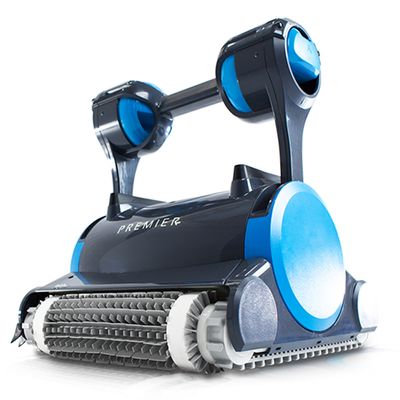
Dolphin Premier robotic pool cleaner

The Short Answer

For a plaster pool, we pick the Dolphin Premier first: it includes both NanoFilters for plaster dust and standard fine filters for everyday debris, and it scrubs the waterline where the scale line forms. Choose the Dolphin Sigma if your plaster is older and rougher and you want four brushes on it, plus a filter alert in the app.

Plaster has a life cycle, and the best robotic pool cleaner for plaster pools is the one that suits the stage yours is in. New marcite or quartz-blend plaster is smooth and sheds dust for weeks. Mature plaster is easy on a robot but still gives off a pale powder, and a scale line builds at the water's edge. Old plaster turns etched and rough, and starts wearing brushes.

The common thread is fine material. Plaster dust is small enough to pass through an ordinary filter and drift back into the pool, which is why a plaster pool can look vacuumed and still seem flat and milky. Ultra-fine filtration takes that powder out of circulation. The Clear S, the Dolphin Quantum and the Dolphin Cayman round out our ranking below.

Our Picks, in Order

Our Picks for Plaster Pools

Every price below is today’s price in our store.

  1. Pick 1: Best Filter Match for Plaster Dust

    Dolphin Premier

    Plaster pools produce two kinds of debris, and the Premier is the one robot here with a dedicated answer to each already in the box. NanoFilters trap the fine plaster powder; standard fine filters handle ordinary dirt without clogging as quickly; the oversized leaf bag covers storm days. They swap through the top in seconds, so matching the filter to the pool is no chore. It scrubs floor, walls and waterline over a 3-hour cycle and lists plaster among its surfaces.

    Best for
    Plaster pools up to 50 ft that show a pale dust on the floor or a milky cast to the water.
    Keep in mind
    No app or phone alerts; a light on the power supply tells you when the filter is full.
    See the Dolphin Premier
  2. Pick 2: Most Brush Contact for Older, Rougher Plaster

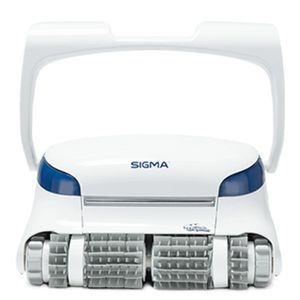
    Dolphin Sigma

    As plaster etches, dirt and algae settle into the pitting, and the Sigma puts quad scrubbing brushes on it with three ProLine motors behind them. Its SmartNav 3.0 gyroscope helps keep the passes even, so the floor is less likely to end up with clean lanes and dusty ones. NanoFilters and standard cartridges are both included, and because fine filters load quickly with plaster dust, the filter alert in the myDolphin Plus app is useful here: you rinse when it tells you.

    Best for
    Aging or etched plaster, and owners who want phone scheduling and a filter-full alert.
    Keep in mind
    Highest price of the group, and rough plaster will wear four brushes as surely as two.
    See the Dolphin Sigma
  3. Pick 3: 1-Micron Panels and a Waterline-Only Mode

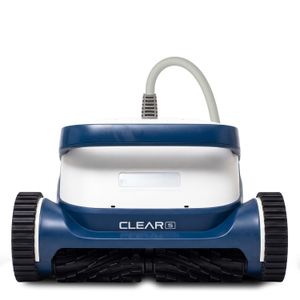
    Clear S

    The Clear S brings two tools a plaster owner will use. Its UltraFilter basket includes 1-micron fine panels for the powder that makes plaster water look milky, with 180-micron coarse panels for everything else. And among its six modes is Waterline only, which sends the robot to work the scale line by itself between full cleanings. Front and rear active scrubbing brushes and 8,500+ GPH of flow do the floor work, with weekly schedules set in the Clear app.

    Best for
    In-ground plaster pools where the waterline band and fine haze are both ongoing chores.
    Keep in mind
    A 1-micron panel fills quickly in a dusty pool, so expect to rinse it often. Hardened scale is beyond any robot.
    See the Clear S
  4. Pick 4: NanoFilter Panels Included at a Lower Price

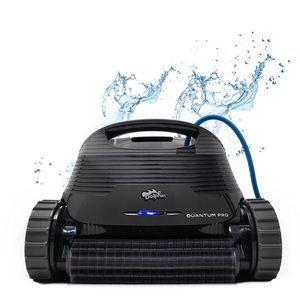
    Dolphin Quantum

    The Quantum is the lowest-priced robot here that ships with ultra-fine filtration: a full set of NanoFilter panels alongside the standard panels for its XXL MaxBin basket. That basket has over 400 square inches of filter area, which helps with plaster dust because a larger filter takes longer to load. The dual HyperBrush spins at twice the speed of standard brushes on floor, walls and waterline, and it also cleans plaster stairs, sun shelves and Baja ledges, where dust loves to settle.

    Best for
    Plaster pools with a tanning ledge or wide steps, on a mid-range budget.
    Keep in mind
    Its warranty is 2 years, and its 2-hour cycle is the shortest of the waterline-scrubbing Dolphins here.
    See the Dolphin Quantum
  5. Pick 5: Small Plaster Pools up to 33 Feet

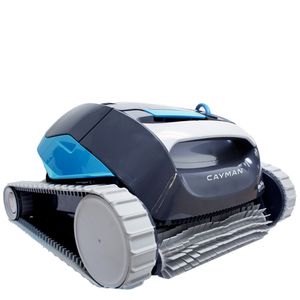
    Dolphin Cayman

    For a plaster pool with a longest run of 33 ft or less, the Cayman covers the essentials. It lists plaster, its HyperBrush spins at twice the speed of standard Dolphin brushes across the floor and walls, and the MaxBin basket with fine panels is 50% larger than standard Dolphin filters. For plaster dust specifically, add the optional NanoFilter panels; we would treat them as part of the purchase on this surface. The power-supply timer runs a cycle every day.

    Best for
    Smaller plaster pools where floor and wall cleaning on a daily timer is enough.
    Keep in mind
    It does not scrub the waterline, so the scale line is yours to brush by hand. NanoFilter panels cost extra.
    See the Dolphin Cayman

What Matters

What Clear Water Asks of a Robot in a Plaster Pool

01

Ultra-Fine Filtration

Plaster dust is the main thing a plaster pool adds to its own water. Standard filters let much of it through, so look for ultra-fine media in the box: NanoFilters on the Premier and Sigma, NanoFilter panels on the Quantum, 1-micron panels on the Clear S.

02

Waterline Scrubbing

Calcium leaves a pale line where water meets plaster, and sunscreen film helps it stick. A robot that climbs and scrubs the waterline works on that band every cycle while the deposit is still soft. The Cayman cleans floor and walls but not the waterline.

03

Brushes for the Age of Your Plaster

Smooth plaster needs little more than regular contact. Etched or pitted plaster holds dirt in its texture and gives algae a place to start, so brush count and brush speed matter more as the surface ages. Rough plaster also wears brushes faster.

04

Timing on New Plaster

A fresh plaster finish cures under water and is brushed by hand during the builder's start-up. No robot belongs in the pool during that period. The usual guidance is about four weeks, but your builder's instruction is the one to follow.

Side by Side

Plaster Pool Robots Side by Side

Specification Dolphin Premier Dolphin Sigma Clear S Dolphin Quantum Dolphin Cayman
Price today $1949 $2349 $1749 $1599 $1049
Brushes Dual scrubbing brushes Quad scrubbing brushes Front and rear active brushes Dual HyperBrush HyperBrush
Cleans Floor, walls and waterline Floor, walls and waterline Floor, walls and waterline Floor, walls, waterline, sun shelves and stairs Floor and walls
Traction HyperGrip tracks HyperGrip tracks — HyperGrip tracks HyperGrip tracks
Pool length Up to 50 ft Up to 50 ft Up to 50 ft Up to 50 ft Up to 33 ft
Filtration Multi-Media: NanoFilters, oversized leaf bag and standard fine filters NanoFilters and standard filter cartridges UltraFilter basket: 1-micron fine and 180-micron coarse panels XXL MaxBin basket with standard and NanoFilter panels MaxBin basket with fine panels; NanoFilter panels optional
Robot weight 20.3 lb 24.6 lb — 18.3 lb 14.6 lb
Warranty 3 years 3 years 3 years (limited) 2 years 2 years
Shop Buy the Dolphin Premier Buy the Dolphin Sigma Buy the Clear S Buy the Dolphin Quantum Buy the Dolphin Cayman

New Plaster: When a Robot Can Go In

Fresh plaster is still curing when the pool is filled. For the first weeks it releases plaster dust in quantity, and the builder's start-up routine deals with it by hand brushing, filtering and careful water balancing. A robot is not part of that routine. The finish is at its softest, and the dust would load a fine filter almost at once. Builders typically ask you to keep automatic cleaners out for about four weeks; finishes and start-up methods differ, so get the date from whoever plastered the pool. When you do start, begin with standard filters, then move to the fine media.

Dust and Scale: What a Robot Removes and What It Leaves

Loose material is a robot's job. Plaster powder on the floor, flakes of scale that have let go, the soft film at the waterline: all of it gets scrubbed up and filtered out, and doing that on a schedule keeps it from cycling back into the water. Bonded material is not. A robot will not remove hardened calcium scale, lift a stain or smooth a rough patch, and it has no effect on water balance, which is what drives scaling and etching in the first place.

Living With Older, Etched Plaster

Plaster that feels like fine sandpaper underfoot has been etched. It grips dirt, it shelters algae, and it is abrasive to brushes, so expect to replace them sooner than you would on a smooth finish. Run the robot more often on this kind of surface so less has time to settle in, and brush the worst patches by hand before a cycle. When the roughness is widespread, resurfacing is the real fix; a robot only manages the symptoms in the meantime.

A Plaster Pool Routine That Works

  1. On new plaster, wait for your builder's go-ahead before the first cycle, typically about four weeks after filling.
  2. Use NanoFilters or the finest panels when you see pale dust, and rinse them after each cycle until the rinse water runs clear.
  3. Switch back to standard filters for leaves and everyday dirt; fine media clog fast on coarse debris.
  4. Schedule cycles ahead of swim time, so settled dust is collected before swimmers stir it up.
  5. Test and balance the water regularly; scale and etching are chemistry problems a robot cannot correct.


SpectraLight pool experts, Mon to Fri 8am to 5:30pm CST

Not sure which robot fits your pool?

Tell a SpectraLight pool expert your pool’s size, surface and what ends up in it, and get a straight answer before you buy.

Call (888) 895-7080

Plaster Pool Owners Ask

How long after new plaster can I use a robotic pool cleaner?

Wait until the builder's start-up period is over, which is typically about four weeks. New plaster is curing and shedding dust during that time, and it is brushed by hand. Ask whoever applied the finish for a specific date, since some finishes and start-up methods call for a different wait.

Why does white dust keep settling on my plaster pool floor?

It is usually plaster dust: fine powder released by the finish, most heavily when new and again as old plaster wears. Ordinary filters pass much of it, so it settles, gets stirred up and settles again. Ultra-fine media such as NanoFilters or 1-micron panels take it out of the loop.

Should I leave NanoFilters in all the time?

Not usually. Ultra-fine filters are for dust and haze. On leaves and heavier dirt they clog quickly, and a clogged filter cuts the robot's flow. Keep both types on hand and choose by what is in the pool; the Premier and Quantum make the swap especially quick.

Do robot brushes wear down plaster?

No. Robot brushes are soft compared with plaster, and on a sound finish they only remove what is sitting on it. The wear goes the other way on old, etched plaster, which is abrasive enough to shorten brush life. Check the brushes a few times a season.

Does a robotic pool cleaner for plaster pools help with rough, scaly patches?

It helps around them, not with them. Scrubbing keeps dirt and algae from building up in the rough texture, and the filter collects flakes that break free. The patch itself is bonded calcium or etched plaster, which needs water-balance correction or surface work.

The Verdict

Plaster in One Decision

Decide by your plaster's stage. If dust and haze are the complaint, the Premier's included NanoFilters and standard filters cover both sides of the problem. If the surface has gone rough, the Sigma's four brushes are worth the step up. The Clear S suits owners focused on the waterline band, the Quantum is the value route to ultra-fine filtration, and the Cayman fits pools of 33 ft or less with the NanoFilter add-on. Each comes with its full manufacturer warranty.