Black Friday SaleFree US shipping on every order
(888) 895-7080
Free Shipping Low Price Guarantee 30-Day Trial & Easy Returns
Free Shipping Low Price Guarantee Speak to a Pool Expert
Free 1–3 Day Shipping on Pool Robots Low Price Guarantee 30-Day Trial & Easy Returns

Buying Guide · Pool Surface

The Best Robotic Pool Cleaner for Concrete Pools, Ranked by Scrubbing Power

Rough, porous concrete holds dirt and sheds grit of its own, so the right robot is the one that scrubs hard, grips well and filters fine.

By the SpectraLight pool experts · Updated November 2026

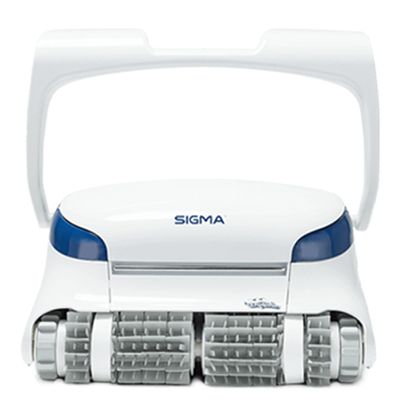
Dolphin Sigma robotic pool cleaner

The Short Answer

The Dolphin Sigma is our first pick for concrete: four scrubbing brushes, three motors and a surface list that names concrete outright. Choose the Dolphin Premier instead if grit is your main complaint, because its filter media swap from a leaf bag to standard fine filters to NanoFilters as the debris changes. For concrete pools of 33 ft or less, the Dolphin Cayman also lists concrete.

Choosing the best robotic pool cleaner for concrete pools starts with the surface itself. Poured concrete, shotcrete and older painted or bare shells are rough and porous. Dirt lodges in the pores, algae finds a foothold in the rough patches, and the surface sheds a sandy grit of its own as it ages. Leave all that alone and the floor turns dull, the water picks up a haze, and every swim stirs it back into circulation.

A robot helps by doing two things often: scrubbing the surface so nothing settles into it, and filtering what the scrubbing lifts. Not every robot is published for concrete, though, so we read each surface list. The Clear S and the Dolphin Quantum make our ranking with notes you should read.

Our Picks, in Order

Our Picks for Concrete Pools

Every price below is today’s price in our store.

  1. Pick 1: Hardest Scrubbing on Rough Concrete

    Dolphin Sigma

    Concrete rewards brush contact more than any other surface, and the Sigma has the most: quad scrubbing brushes driven by three commercial-grade ProLine motors, with 4,500 GPH of flow to carry off what they loosen. Its surface list names concrete, and HyperGrip tracks keep it moving over rough patches and up the walls to the waterline. NanoFilters and standard filter cartridges are both included, so you can run standard cartridges while the pool is gritty and switch to NanoFilters for the dust.

    Best for
    Rough or aging concrete pools up to 50 ft where embedded dirt and algae shadows are the main problem.
    Keep in mind
    Highest price here, and concrete will wear its four brushes faster than a vinyl pool would. Plan on replacements.
    See the Dolphin Sigma
  2. Pick 2: Best Filter Range for Concrete Grit

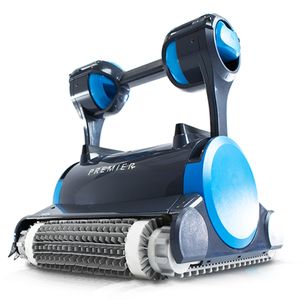
    Dolphin Premier

    The Premier also lists concrete, and it answers the grit problem better than anything else here. Multi-Media filtration gives you an oversized leaf bag for the heavy sandy load, standard fine filters for everyday cycles and NanoFilters for the gray dust, all included and swapped in seconds from the top. Dual scrubbing brushes and dual ProLine motors at 4,500 GPH work the floor, walls and waterline through a 3-hour cycle, which gives a rough floor more passes.

    Best for
    Concrete pools that shed a lot of grit, and owners who want a timer on the power supply instead of a phone.
    Keep in mind
    Two brushes, not four, so it scrubs a little less aggressively than the Sigma. No app.
    See the Dolphin Premier
  3. Pick 3: Strongest Flow for Heavy Sediment

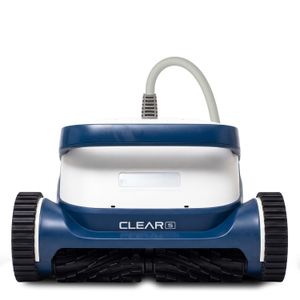
    Clear S

    Where a concrete floor collects sediment, flow matters, and the Clear S moves 8,500+ GPH from two pump motors. Front and rear active scrubbing brushes work the surface in both directions, and the UltraFilter basket pairs 180-micron coarse panels for grit with 1-micron fine panels for dust. A Floor only mode spends the whole cycle where concrete debris settles, and Ultra mode runs 3 hours. It is built for in-ground residential pools up to 50 ft.

    Best for
    In-ground concrete pools with heavy floor sediment, and owners who want app scheduling.
    Keep in mind
    Check its manual for your exact finish, or ask us to confirm bare or painted concrete before you order.
    See the Clear S
  4. Pick 4: Pick for Plastered or Pebble-Finished Concrete

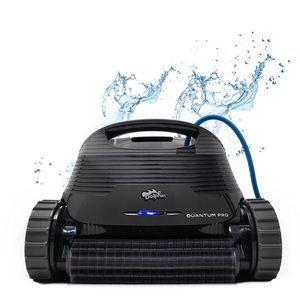
    Dolphin Quantum

    Most concrete pools wear a finish coat, and that is the Quantum's territory. Its published surfaces are gunite, plaster, pebble, tile, vinyl liner and fiberglass, so we recommend it for a concrete shell finished in plaster or pebble, not for raw, bare concrete. On those finishes its dual HyperBrush spins at twice the speed of standard brushes, and the XXL MaxBin basket, with over 400 square inches of filter area, takes a heavy grit load. NanoFilter panels are included.

    Best for
    Plastered or pebble-finished concrete pools up to 50 ft, especially ones with a shelf or stairs.
    Keep in mind
    Concrete is not named in its surface list, and the warranty is 2 years.
    See the Dolphin Quantum
  5. Pick 5: Concrete Pools of 33 Feet or Less

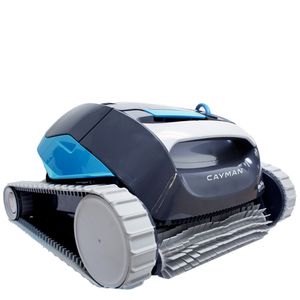
    Dolphin Cayman

    The Cayman lists concrete by name, which makes it the right small-pool pick. One HyperBrush spinning at twice the speed of standard Dolphin brushes scrubs the floor and walls, dual 24-volt DC motors move over 4,000 GPH, and the MaxBin basket, 50% larger than standard Dolphin filters, empties through a top hatch with one tab. The timer on the power supply runs a cycle every day, which suits a surface that sheds a little grit all the time.

    Best for
    Smaller concrete pools, in-ground or above-ground, with a longest run of 33 ft or less.
    Keep in mind
    Floor and walls only, with no waterline scrubbing. NanoFilter panels for fine dust are an optional add-on.
    See the Dolphin Cayman

What Matters

What Concrete Asks of a Robot

01

Scrubbing Force

Concrete is porous, so dirt and early algae sit in the surface, not on it. Suction alone leaves them there. Count the brushes and how they are driven: more brush contact per pass means more of that embedded film gets lifted to where the filter can catch it.

02

Grip on a Coarse, Uneven Floor

Older concrete settles. Floors develop low spots, hairline cracks and rough transitions where the shell meets a step. Rubber tracks keep a robot driving across texture and small ridges and up a gritty wall. Every Dolphin here runs on HyperGrip tracks.

03

Filtration for Grit and Dust

Concrete produces two kinds of debris: coarse sandy grit and a fine gray dust. A good match gives you capacity for the first and fine media for the second, because the dust is what stays suspended and makes the water look flat.

04

A Surface List That Names Concrete

The Sigma, Premier and Cayman publish concrete among their surfaces. The Quantum's list names gunite, plaster, pebble, tile, vinyl and fiberglass, which covers finished concrete but not bare. The Escape's list does not name concrete at all, which is why it is not a pick here.

Side by Side

Concrete Pool Robots Compared

Specification Dolphin Sigma Dolphin Premier Clear S Dolphin Quantum Dolphin Cayman
Price today $2349 $1949 $1749 $1599 $1049
Brushes Quad scrubbing brushes Dual scrubbing brushes Front and rear active brushes Dual HyperBrush HyperBrush
Cleans Floor, walls and waterline Floor, walls and waterline Floor, walls and waterline Floor, walls, waterline, sun shelves and stairs Floor and walls
Traction HyperGrip tracks HyperGrip tracks — HyperGrip tracks HyperGrip tracks
Pool length Up to 50 ft Up to 50 ft Up to 50 ft Up to 50 ft Up to 33 ft
Filtration NanoFilters and standard filter cartridges Multi-Media: NanoFilters, oversized leaf bag and standard fine filters UltraFilter basket: 1-micron fine and 180-micron coarse panels XXL MaxBin basket with standard and NanoFilter panels MaxBin basket with fine panels; NanoFilter panels optional
Robot weight 24.6 lb 20.3 lb — 18.3 lb 14.6 lb
Warranty 3 years 3 years 3 years (limited) 2 years 2 years
Shop Buy the Dolphin Sigma Buy the Dolphin Premier Buy the Clear S Buy the Dolphin Quantum Buy the Dolphin Cayman

Which Kind of Concrete Pool Do You Have?

Concrete is a shell material, and what the robot touches is whatever covers it. Poured concrete and shotcrete pools are usually finished in plaster, pebble or tile; those behave like their finish, and the choice among our picks comes down to brushes and filters. Older pools are sometimes painted, and the paint chalks into a fine powder as it ages, which puts fine filtration first. A few are bare concrete, the roughest of all: best at holding dirt and hardest on brushes. For bare concrete, stay with the robots that name concrete: the Sigma, the Premier and, on smaller pools, the Cayman.

Cracks, Low Spots and Rough Patches

A robot cleans the surface it can touch. Hairline cracks and settled sections do not stop a tracked robot, but debris collects in them, and brushes pass over a crack without reaching into it. Rough patches where the finish has worn through are where algae starts first, because the brush skims the high points. Plan to hand-brush those spots weekly and let the robot handle the open floor and walls. No robot repairs a crack, and a pool that keeps shedding sand from one area is telling you about the surface, not the cleaner.

Brush Wear on Concrete

Expect brushes to wear faster on concrete than they would on vinyl. That is normal: the surface is abrasive and the brushes are meant to be the part that gives. Look at them every month or so in swim season. Brushes that have gone smooth scrub less and can cost the robot grip on the walls, so replace them when the texture is gone. Rinsing grit out of the brushes and tracks when you empty the filter keeps sand from being carried back in.

Setting Up a Robot in a Concrete Pool

  1. Run standard filters for the first cycles in a gritty pool, then switch to the fine media once the sandy load drops.
  2. Hand-brush cracks, steps and worn patches once a week so the robot's filter can collect what you loosen.
  3. Rinse the filter after every cycle while the pool is shedding grit; a loaded filter cuts water flow, and cleaning with it.
  4. Take the robot out before shocking or acid treatments, and put it back once the water is balanced.


SpectraLight pool experts, Mon to Fri 8am to 5:30pm CST

Not sure which robot fits your pool?

Tell a SpectraLight pool expert your pool’s size, surface and what ends up in it, and get a straight answer before you buy.

Call (888) 895-7080

Concrete Pool Questions

Will a robotic cleaner damage a concrete pool surface?

No. The brushes are far softer than concrete, so the wear runs the other way: the pool wears the brushes. What a robot can do is knock loose material that was already failing, such as flaking paint or crumbling plaster, and collect it. That is a sign the surface needs attention.

Is gunite the same as concrete when choosing a robot?

For this purpose, yes. Gunite and shotcrete are concrete applied by spraying, and the robot never touches the shell, only the finish over it. Every Dolphin on this page publishes gunite. The difference shows up on bare concrete, where the Sigma, Premier and Cayman are the ones that name the surface.

Why does my robot's filter fill with sand in a concrete pool?

Usually because the surface is giving some up. Aging concrete and worn plaster release a sandy grit, and wind adds more. Empty the filter after each cycle until the load eases. If sand piles up in the same spot day after day, have the surface or your pool filter looked at; a robot can only collect it.

Does the Dolphin Quantum work in a concrete pool?

Yes, when the concrete has a finish. Its published surfaces include gunite, plaster, pebble and tile, which describes most concrete pools. The list does not name concrete itself, so for a bare shell we point you to the Sigma or the Premier instead.

Is a robotic pool cleaner for concrete pools different from one for vinyl?

The machines can be the same; the priorities differ. Vinyl is smooth and gentle on brushes. Concrete is abrasive and porous, so scrubbing power, track grip and filter capacity for grit move to the top of the list, and brushes become a part you will replace.

The Verdict

The Short Rule for Concrete

Buy for scrubbing first and filtration second. On bare or badly worn concrete, choose a robot that names the surface: the Sigma for the most brush contact, the Premier for the widest filter range, the Cayman at 33 ft or less. On plastered or pebble-finished concrete, the Clear S and Quantum join the list. SpectraLight is an authorized Dolphin dealer, and our pool experts are glad to help you match a robot to your surface.