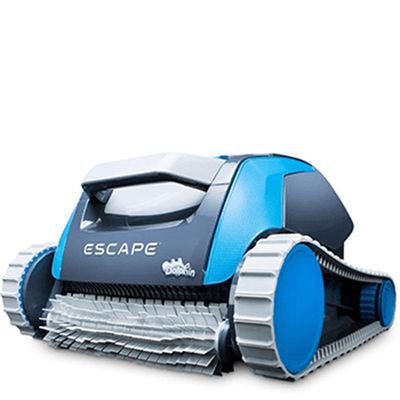
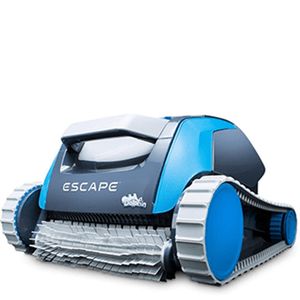
Why Our In-Ground Robots Are Not on This List
Our guides cover five other robots, and in an in-ground pool several of them would outrank both picks here. None belongs in a pool with a liner over sand and flexible walls. The Premier, Sigma and Quantum are rated for in-ground pools only, weigh between 18.3 and 24.6 lb, and run two to three hours per cycle. The Clear S and Clear UV are in-ground residential robots as well. Using one here is outside what its maker rates it for, and the extra money buys range a 24 ft round will never use.
Check the Liner Floor Before the First Run
Most trouble on above-ground vinyl starts with the floor, not the robot. Look the pool over through clear water before the first cycle, and again each spring.
- Wrinkles: a raised ridge of loose liner can turn a robot aside and collects silt along its edge. Work wrinkles toward the wall on a warm day, when the vinyl is soft.
- Footprints and divots: shallow heel dents are normal and the tracks ride over them. A deep washout in the sand base waits for the next liner change, so expect a little silt to stay in the hollow.
- The cove: the curved wedge where floor meets wall collects the finest debris. Both robots cross it on the way up the wall, but brush it by hand weekly in pollen season.
- Ladders and drop-in steps: an A-frame ladder or step unit leaves gaps a robot cannot enter. Lift it out for the cycle, or plan to brush behind it.
Measure the Cable Run, Especially on a Big Round
Both robots are rated for pools up to 33 ft, and that rating refers to the pool's longest straight run. Cable is a separate check. The power supply has to sit back from the water's edge by the distance your manual gives, so part of the cable is spent before the robot is in the water, and a little more goes on climbing the wall.
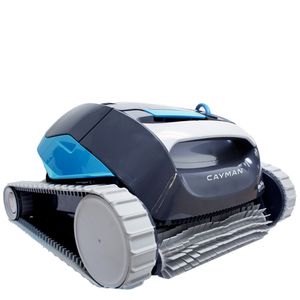
As an example only, with a setback of roughly 12 ft, a 40 ft cable leaves about 28 ft to cross the pool and a 50 ft cable about 38 ft. Use the figure in your own manual. On rounds larger than about 24 ft, measure from where the power supply will sit to the farthest point of the floor. If the shorter cable would be stretched to its limit, the Cayman is the safer choice.
What the Robot Leaves for You
Neither pick scrubs the waterline, so the ring of sunscreen and pollen that forms at the surface of a vinyl pool still needs a soft cloth every week or two. A robot also works under the surface: floating leaves and bugs belong to your skimmer or a hand net. And it does not stand in for sanitizer, or for hand brushing during an algae treatment. What it takes over is the floor and wall vacuuming, the chore most above-ground owners skip, and skipped vacuuming is what turns a liner dull.
Setup Tips for a Liner Pool
- Lower the robot in gently and let it sink level. Dropping it from the top rail onto a liner over sand can leave a dent.
- Place the power supply on the side of the pool nearest the outlet, at the setback your manual gives, and uncoil the whole cable so it lies straight.
- Empty and rinse the MaxBin basket after every cycle for the first week. A newly opened pool sheds far more fine debris than it will later in the season.
- Take the robot out before shocking or adding chemicals, and keep it in the shade between uses, not on the deck in full sun.