




Ultra-Fine Media in the Box
This is not a job for standard panels. Dead algae needs NanoFilter-class media or 1-micron panels, and you want them on hand the day the dust appears, not on order while it sits. Each of the five picks includes them.

Talk to a SpectraLight Expert
Real pool people, no scripts. Pick how you'd like to reach us.
Live chat
Fastest answer. Usually under a minute.
Call us
(888) 895-7080
Send a message
We reply by email, usually the same business day.
Browse on your own
FAQ Installation Compare models How UV works Replacement lamps Help & Support portalBuying Guide · Debris and Dirt Problems
The shock worked, the green is gone, and now a pale dust clouds the water every time it is touched: here is which robots can filter it out.
By the SpectraLight pool experts · Updated November 2026
The Short Answer
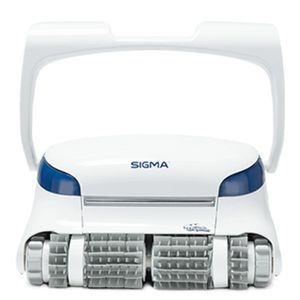
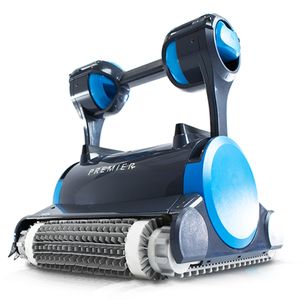
The Dolphin Sigma is our first choice for dead algae: NanoFilters come included, three motors move 4,500 GPH, and its app flags a loaded filter, which happens quickly with this dust. Pick the Dolphin Premier instead if you would rather skip the phone: it also includes NanoFilters, they lift out the top without tools, and a full-filter indicator sits on the power supply.
A day or two after a successful shock, the pool floor is covered in something new: a grey-white or tan dust that billows the moment a brush, a foot or a vacuum head comes near it. That is dead algae, and it is among the finest debris a pool ever holds. The best robotic pool cleaner for dead algae is simply the one that keeps the dust once it is picked up. A robot with standard filter panels will lift it, pass much of it through, and hand you back a cloudy pool.
Every pick here includes ultra-fine media: NanoFilters with the Sigma and Premier, 1-micron panels in the Clear S and Clear UV, and a full set of NanoFilter panels with the Dolphin Quantum. What separates them is what happens next, because this dust loads a fine filter quickly: how you know the filter is full, and how fast you can rinse it and send the robot back in.
Our Picks, in Order
Every price below is today’s price in our store.
Pick 1: Fine Filters With an Alert When They Load
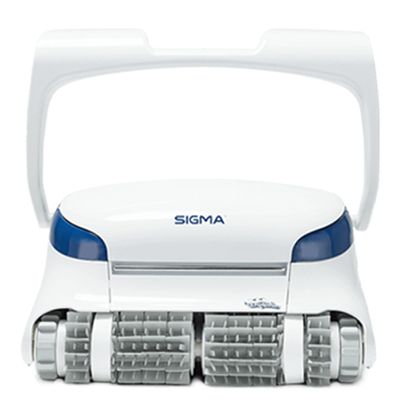
On this job the filter fills long before the cycle ends, and the Sigma is the pick that tells your phone when it has: the myDolphin Plus app sends a filter alert, so you rinse at the right moment and not an hour late. NanoFilters come included alongside the standard cartridges. Three commercial-grade ProLine motors move 4,500 GPH, quad scrubbing brushes lift dust that has stuck to the floor, and SmartNav 3.0 with an onboard gyroscope works the pool in an orderly pattern.
Pick 2: Top-Load NanoFilters and a Full-Filter Indicator
The Premier handles the rinse-and-repeat routine well. Its NanoFilters are included, they load from the top with no tools, and the power supply carries a full-filter indicator, so you can see from the deck when the dust has clogged the media. Dual commercial-grade ProLine motors move 4,500 GPH, and the three-hour cycle gives the robot time to work a large floor. When the cleanup is done, the standard fine filters go back in for everyday use.
Pick 3: 1-Micron Panels and a Floor Only Mode
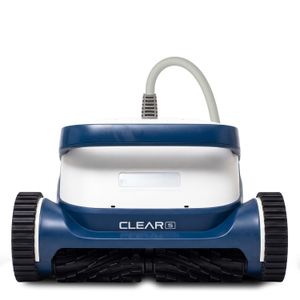
The Clear S brings two tools that fit this problem exactly. The UltraFilter basket includes panels rated at 1 micron, and the Clear app has a Floor only mode, so the whole cycle is spent where dead algae lies. Two pump motors move 8,500+ GPH. For the repeat passes, the one-hour Fast mode gets the robot back in the water between rinses without a full cycle, and manual joystick driving in the app lets you steer it to a patch the last run left.
Pick 4: Identical Dust Pickup, Plus a UV-C Light
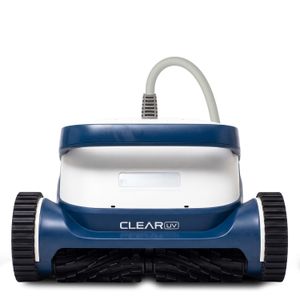
For settled dust, the Clear UV and the Clear S do identical work: identical 1-micron panels, identical flow at 8,500+ GPH, and the same Floor only, Fast and Ultra modes. The UV model adds a built-in UV-C light controlled from the Clear app and costs more. We place it one step behind because filtering is what this job needs, and the two filter identically. If you already wanted the Clear UV for year-round use, it does this cleanup equally well.
Pick 5: Over 400 Square Inches of Fine Panels
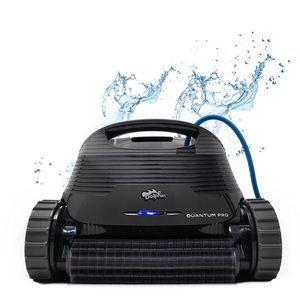
The Quantum's argument is surface area. The XXL MaxBin basket offers more than 400 square inches of filter, and it comes with a complete set of NanoFilter panels, so the dust has more media to spread across before a rinse is needed. When that time comes, one click opens the basket from the top. Its two-hour cycle and 4,000 GPH are a step below the first two picks, and its warranty is shorter, which is why it ranks fifth. Of the 50 ft picks here, it also carries the lowest price.
What Matters
This is not a job for standard panels. Dead algae needs NanoFilter-class media or 1-micron panels, and you want them on hand the day the dust appears, not on order while it sits. Each of the five picks includes them.
Fine media clogs fast on this job, and a clogged filter means weak pickup and dust left behind. An indicator or a phone alert tells you when to stop and rinse, so you are not guessing at cycles that have quit collecting.
Expect several rounds: run, rinse, run again. How the filter comes out of the robot matters more than usual here. Top-loading filters and baskets that open in one motion keep each round short.
Dead algae settles on the floor, so floor coverage does the work. Orderly navigation and, where a robot offers one, a floor-only mode put the whole cycle where the dust is.
Side by Side
| Specification | Dolphin Sigma | Dolphin Premier | Clear S | Clear UV | Dolphin Quantum |
|---|---|---|---|---|---|
| Price today | $2349 | $1949 | $1749 | $1999 | $1599 |
| Filtration | NanoFilters and standard filter cartridges | Multi-Media: NanoFilters, oversized leaf bag and standard fine filters | UltraFilter basket: 1-micron fine and 180-micron coarse panels | UltraFilter basket: 1-micron fine and 180-micron coarse panels | XXL MaxBin basket with standard and NanoFilter panels |
| Filter access | Cartridges | Top-load, no tools | — | — | Top-load, one-click open |
| Brushes | Quad scrubbing brushes | Dual scrubbing brushes | Front and rear active brushes | Front and rear active brushes | Dual HyperBrush |
| Flow rate | 4,500 GPH | 4,500 GPH | 8,500+ GPH | 8,500+ GPH | 4,000 GPH |
| Cycle time | 2.5 hours | 3 hours | 1, 2 or 3 hours (six modes) | 1, 2 or 3 hours (six modes) | 2 hours |
| Cleans | Floor, walls and waterline | Floor, walls and waterline | Floor, walls and waterline | Floor, walls and waterline | Floor, walls, waterline, sun shelves and stairs |
| Scheduling | Weekly scheduler by day and time | Weekly timer: every day, every 2 days or every 3 days | Weekly schedules in the Clear app | Weekly schedules in the Clear app | Weekly timer: every day, every 2 days or every 3 days |
| Warranty | 3 years | 3 years | 3 years (limited) | 3 years (limited) | 2 years |
| Shop | Buy the Dolphin Sigma | Buy the Dolphin Premier | Buy the Clear S | Buy the Clear UV | Buy the Dolphin Quantum |
The robot is only half of a good dead-algae cleanup. The other half is patience, because this dust is easier to catch lying still than drifting.
For a heavy layer, vacuum to waste first if your filter system allows it. That sends the bulk out of the pool and leaves the robot the fine remainder.
If the water hazes over again after each cleaning, one of three things is happening. The filter media may be too coarse, so dust goes in and comes straight out: that is the usual result with standard panels, including those on the Dolphin Cayman and Escape unless their optional NanoFilter panels are added. The filter may be full and no longer holding. Or the dust is not all dead.
Algae that is still growing keeps producing more, and no amount of vacuuming ends that. If chlorine will not hold overnight, the treatment is not finished, and that is a chemistry job. A robot removes what the shock killed. It does not do the killing.
SpectraLight pool experts, Mon to Fri 8am to 5:30pm CST
Tell a SpectraLight pool expert your pool’s size, surface and what ends up in it, and get a straight answer before you buy.
When chlorine has dropped back into the normal range, not before. How long that takes depends on the dose, the sun and the pool, so go by a test kit and not the clock. Robots should come out before shocking and stay out while the level is high. Your manual gives the limits for your model.
Both have a place. Vacuuming to waste is faster for a thick layer because the dust leaves the pool entirely, but it costs water and not every filter system can do it. A robot with ultra-fine media handles light to moderate layers, and the fine remainder after a waste vacuum, with no water lost.
Because the particles are smaller than the openings. Standard panels are made for leaves, sand and everyday dirt. Dead algae is finer than almost anything else in a pool, which is why it calls for NanoFilters, NanoFilter panels or 1-micron panels.
Timing and behavior tell you. Dead algae appears a day or two after a shock, is grey-white or tan, and rises as a cloud at the slightest touch. Dirt and sand are heavier: they stay put when you wave a hand over them.
A clarifier clumps fine particles so filters catch more of them, which can shorten the cleanup. Flocculant is different: it drops everything into a heavy layer that is meant to be vacuumed to waste, not run through any filter, a robot's included. Follow the product label either way.
The Verdict
Buy for the filter and for the routine around it. The Sigma is the pick if you want to be told when to rinse. The Premier gives you the same class of filtration with no-tools access and no phone. Choose the Clear S for a floor-only cycle and 1-micron panels, the Clear UV only if you also want its light, and the Quantum for a big fine basket at a lower price. Then be patient: settle, collect, rinse, repeat. Questions about your pool? Chat with a pool expert.