Square, Radius and Step Corners
Not all corners are equally hard. A radius or coved corner, where the walls curve into each other, is the easy case: the brush follows the curve and nothing is left behind. Fiberglass pools and many vinyl pools are built this way.
A true 90-degree corner in a concrete or tile pool is harder, because a rotating brush cannot reach the last inch where three surfaces meet. Step corners are hardest of all. They are small, there are many of them, and the water around steps moves least. Expect to brush them by hand as part of normal care.
What Still Needs a Hand Brush
Whichever robot you buy, a few places will want a stiff brush on a pole for a minute a week. Push the debris onto open floor before a cycle and the robot collects it. That minute matters most during an algae treatment, when brushing is part of the cure and no robot replaces it. The places to remember:
- The last inch of a sharp corner, where two walls meet the floor.
- Behind ladders and handrail anchors, where a robot's body cannot pass.
- The inside corners of steps and benches.
Help the Corners Help Themselves
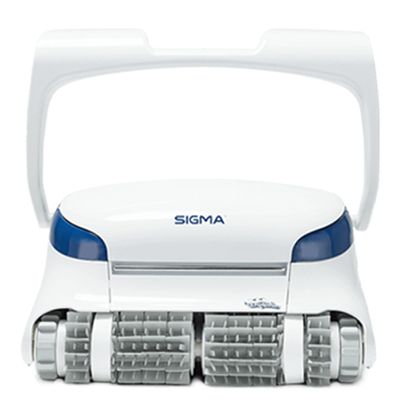
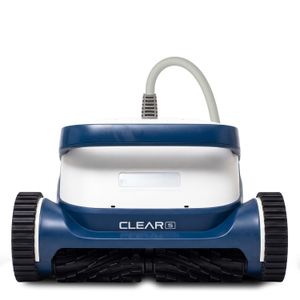
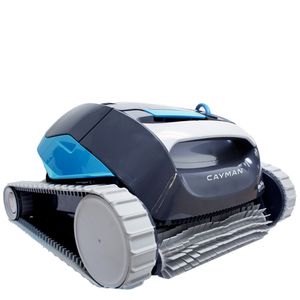
Corners get dirty because water does not move there, so improve the movement. Angle one return jet along the wall toward your worst corner, tilted slightly down so the flow reaches the floor. Then let the robot keep up: a corner cleaned every day or two never builds enough film to matter. Two robots outside this shortlist are sound in corners as well. The Escape uses the same single HyperBrush as the Cayman. The Clear UV scrubs exactly as the Clear S does and adds a built-in UV-C light controlled from the Clear app.
A Corner Routine That Works
- Brush the corners toward the middle of the pool just before a cycle, so the loosened debris is on open floor when the robot arrives.
- Point a return jet along the wall toward the corner that gets dirty first. Moving water is the cheapest corner cleaner there is.
- Use fine filtration for routine runs. Corner debris is mostly dust and dead algae, and a coarse filter lets it drift straight back.
- Keep the gaps between runs short, so a corner film never has time to take hold.