Black Friday SaleFree US shipping on every order
(888) 895-7080
Free Shipping Low Price Guarantee 30-Day Trial & Easy Returns
Free Shipping Low Price Guarantee Speak to a Pool Expert
Free 1–3 Day Shipping on Pool Robots Low Price Guarantee 30-Day Trial & Easy Returns

Buying Guide · Robot Features

The Best Robotic Pool Cleaner With a Gyroscope, and Who Actually Needs One

A gyroscope tells a robot which way it is pointing and tilting. In the right pool that means even coverage; in a plain rectangle it is money you need not spend.

By the SpectraLight pool experts · Updated November 2026

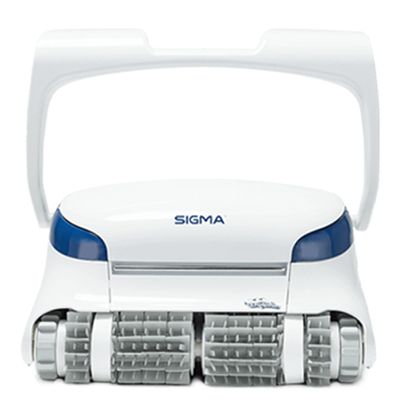
Dolphin Sigma robotic pool cleaner

The Short Answer

The Dolphin Sigma is the one Dolphin in this guide with a gyroscope, built into SmartNav 3.0, and it is our first pick for freeform, sloped and obstacle-heavy pools. The Clear S is the alternative: a gyroscope plus an accelerometer, coverage that tightens after two or three cycles, and a lower price than the Sigma. Check the live price on each card.

Drop a robot into a kidney-shaped pool with a sloped floor and watch what happens when it meets the main drain. It rides up, twists a few degrees and sets off again, now pointing somewhere new. With no sense of direction it cannot know that, and the neat pattern it was running becomes a wander. A gyroscope is the part that fixes this. It senses rotation and tilt, so the robot knows it has been turned and can come back to its line.

That is why shoppers look for the best robotic pool cleaner with gyroscope navigation, and it is a short list. At SpectraLight, the Sigma has one, and so do the Clear S and its sibling, the Clear UV. The Premier, Quantum, Cayman and Escape navigate by SmartNav 2.0 scanning without a gyroscope. They are good robots, and for many pools they are all you need, which this page will be straight about.

Our Picks, in Order

The Two Gyroscope Robots We Recommend

Every price below is today’s price in our store.

  1. Pick 1: The Only Dolphin Here With a Gyroscope

    Dolphin Sigma

    Among the five Dolphins in our guides, the Sigma alone has a gyroscope. It sits inside SmartNav 3.0, where it gives the scanning software a live reading of heading and tilt. The effect shows in difficult pools: straight passes across a sloped floor, a clean recovery after a drain or ladder turns the robot, and even coverage in freeform shapes with no square corner to reset against.

    The robot around the sensor is just as serious. Three commercial-grade ProLine motors move 4,500 GPH, quad scrubbing brushes work floor, walls and waterline on a 2.5-hour cycle, and NanoFilters are in the box. The 55 ft cable has a 360-degree anti-tangle swivel, the myDolphin Plus app schedules cleaning by day and time, and the warranty is 3 years.

    Best for
    Freeform, kidney, sloped or fixture-crowded in-ground pools up to 50 ft whose owners want the most even coverage.
    Keep in mind
    It is the highest-priced robot on this page and, at 24.6 lb, the heaviest of the five Dolphins; a simple rectangle will not use what you paid for.
    See the Dolphin Sigma
  2. Pick 2: Gyroscope Plus Accelerometer, With App Steering

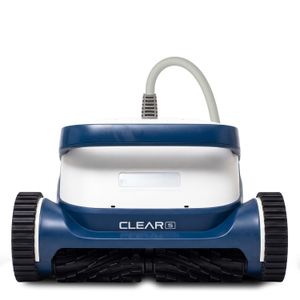
    Clear S

    The Clear S pairs its gyroscope with an accelerometer, so it senses both rotation and tilt. Coverage tightens after two or three cycles, so the first runs in a new pool are not the ones to judge it by. It is rated for in-ground residential pools up to 50 ft and for water from 2.5 to 16.4 ft deep.

    The navigation is backed by real cleaning hardware: 8,500+ GPH from two pump motors, front and rear active scrubbing brushes, and an UltraFilter basket with 1-micron fine and 180-micron coarse panels. The Clear app adds weekly schedules, six modes and manual joystick driving, so if the robot misses a spot you can steer it there. It ranks second because the Sigma adds a swivel cable and two more brushes; its price sits below the Sigma's.

    Best for
    Owners of irregular in-ground pools who want gyroscope navigation with app modes and manual steering.
    Keep in mind
    It is for in-ground pools only, and it needs two or three cycles for coverage to settle before you judge it.
    See the Clear S

What Matters

What a Gyroscope Changes in the Water

01

Holding a Straight Line

Coverage patterns are built from straight passes. A robot that drifts a few degrees on each pass leaves wedges of floor untouched. A gyroscope detects the drift as it happens, so the pass stays true even when a slope or the cable is nudging the robot aside.

02

Knowing Wall From Floor From Slope

By sensing tilt, the robot can tell when it has started up a wall, when it is descending toward the deep end, and when it is level again. That matters most in pools where floor and wall blend in one long curve.

03

Recovering After a Knock

Drain covers, ladder feet and step edges all turn a robot slightly. With a gyroscope it registers the turn and corrects. Without one, it carries on along the new heading until its scanning pattern brings it back.

04

The Rest of the Navigation

A gyroscope is a sensor, not a system. On the Sigma it works inside SmartNav 3.0. On the Clear S it works with an accelerometer, and coverage tightens after two or three cycles. Neither robot maps the pool with cameras or sonar.

Side by Side

The Two Gyroscope Robots, Spec by Spec

Specification Dolphin Sigma Clear S
Price today $2349 $1749
Cleans Floor, walls and waterline Floor, walls and waterline
Scheduling Weekly scheduler by day and time Weekly schedules in the Clear app
App myDolphin Plus (Wi-Fi and Bluetooth) Clear app (iOS and Android)
Filtration NanoFilters and standard filter cartridges UltraFilter basket: 1-micron fine and 180-micron coarse panels
Brushes Quad scrubbing brushes Front and rear active brushes
Navigation SmartNav 3.0 with gyroscope Gyroscope and accelerometer
Cable 55 ft with 360° anti-tangle swivel 59 ft anti-tangle
Warranty 3 years 3 years (limited)
Shop Buy the Dolphin Sigma Buy the Clear S

What a Gyroscope Does Inside a Pool Robot

A gyroscope is a small motion sensor, the same kind of part that lets a phone know it has been rotated. In a pool robot it reports two things many times a second: how far the robot has turned, and how it is tilted. The navigation software uses the first to hold and recover a heading, and the second to recognize walls and slopes. An accelerometer, which the Clear S adds, senses changes in speed and the pull of gravity, giving a second reading of tilt. Neither sensor sees the pool. They tell the robot about its own movement, and the software does the rest.

Who Actually Needs One

A gyroscope pays for itself where something keeps pushing a robot off line. That usually means one of four pools:

  • Freeform, kidney and lagoon shapes, where there are no straight walls to square up against.
  • Floors with a real slope or a hopper-style deep end, where gravity pulls the robot downhill on every crossing pass.
  • Pools crowded with fixtures: raised main drains, ladders, handrails, steps and benches that knock the robot round.
  • Long pools, where a small heading error at one end becomes a wide miss at the other.

When a Robot Without a Gyroscope Is the Smarter Buy

If your pool is a rectangle or a plain oval with a gentle floor, a gyroscope has little to correct, and the money may be better spent elsewhere. The Premier and Quantum both navigate by SmartNav 2.0 scanning without a gyroscope, both are rated to 50 ft with waterline cleaning and a swivel cable, and both cost less than the Sigma. For pools up to 33 ft, the Cayman and Escape use SmartNav 2.0 as well. None of the four belongs in a gyroscope ranking, but each is a sound robot for a straightforward pool.

The Clear UV, meanwhile, has the same gyroscope and accelerometer as the Clear S, plus a built-in UV-C light controlled from the Clear app, at a higher price.

What a Gyroscope Cannot Fix

It is a navigation aid, and three common coverage problems are not navigation problems. A filter packed with debris cuts the flow that holds a robot on the wall, so it slides back whatever its sensors say. A cable twisted into coils drags the robot off its line; the Sigma's swivel helps there, and any cable benefits from being laid out straight. And no sensor extends a robot's reach: most top steps and very shallow ledges stay outside what these robots clean. Water chemistry, of course, remains your job and your sanitizer's.

Getting the Benefit of a Gyroscope

  1. Start each cycle from the same place, ideally midway along the pool's long side. A consistent start gives the robot the best chance of a consistent pattern.
  2. With the Clear S, run two or three full cycles before changing anything, since its coverage is described as tightening over those first runs.
  3. Keep the cable straight, with only as much in the water as the pool needs, so the sensor is correcting for the pool and not for the cable.
  4. Use the schedule. The Sigma's app sets cleaning by day and time and the Clear app sets weekly schedules, so coverage happens whether or not you remember.


SpectraLight pool experts, Mon to Fri 8am to 5:30pm CST

Not sure which robot fits your pool?

Tell a SpectraLight pool expert your pool’s size, surface and what ends up in it, and get a straight answer before you buy.

Call (888) 895-7080

Gyroscope Questions From Shoppers

Which Dolphin robots have a gyroscope?

Of the five Dolphins compared in our guides, only the Sigma, where it is part of SmartNav 3.0. The Premier, Quantum, Cayman and Escape use SmartNav 2.0 scanning without a gyroscope. If a gyroscope is a must-have and you want a Dolphin, the Sigma is the choice.

Is a gyroscope worth paying more for?

In a freeform, sloped or obstacle-heavy pool, yes: it is the feature most directly tied to even coverage in those shapes. In a simple rectangle with a gentle floor, usually not, and a scanning robot will clean it well for less. Decide by the pool, not by the spec sheet.

Does the Clear UV have a gyroscope?

Yes. The Clear UV is the same robot as the Clear S, with the same gyroscope and accelerometer and the same coverage behavior. It adds a built-in UV-C light controlled from the Clear app and costs more. For navigation alone there is no reason to choose one over the other.

What is the difference between a gyroscope and an accelerometer?

A gyroscope senses rotation: how far and how fast the robot has turned or tipped. An accelerometer senses changes in speed and the direction of gravity. Used together, as on the Clear S, they give the robot two independent readings of its own motion. The Sigma uses a gyroscope within SmartNav 3.0.

Will a robotic pool cleaner with gyroscope navigation stop getting stuck?

It helps the robot recover its heading after an obstacle turns it, which reduces aimless circling. It does not make a robot immune to a raised drain cover it cannot climb, a cable wrapped round a ladder, or a toy left in the pool. Clear out loose items and keep the cable tidy for the best results.

The Verdict

The Gyroscope Decision

Buy a gyroscope for the pool, not for the brochure. If yours is freeform, sloped or full of fixtures, choose the Sigma for the most complete package: gyroscope, swivel cable, quad brushes and a 3-year warranty. Choose the Clear S if you prefer its app, its modes and manual steering, and are happy to give it a few cycles to settle. If your pool is a simple rectangle, save the money and look at a scanning robot. Not sure which describes your pool? Chat with a pool expert and we will tell you honestly.