The Cable Math, Worked Out
The figures below use roughly 12 ft as an example setback between the power supply and the water. That is a typical figure, not a published spec, so replace it with the number in your own manual. Add the depth of your deep end to each total, since the cable also has to reach the floor.
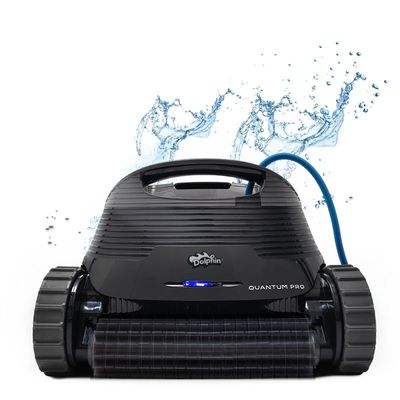
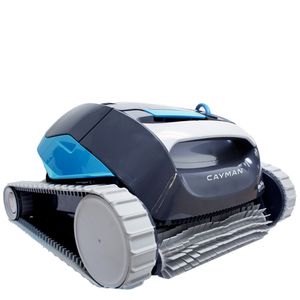
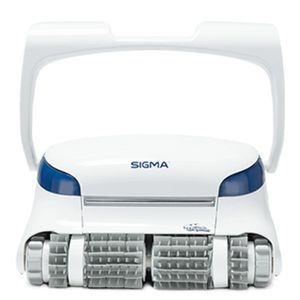
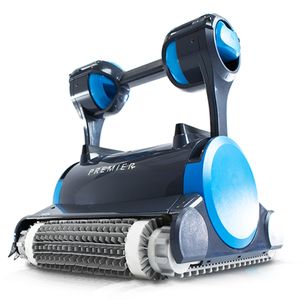
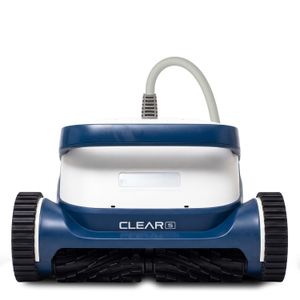
Read the table against cable lengths. The Cayman has 50 ft. The Quantum, Sigma and Premier have 55 ft. Clear S has 59 ft. On a rectangle, moving the power supply to the middle of a long side takes about 10 ft off the requirement. On a round pool nothing shortens the run, which is why a 40 ft cable has to be measured with care on a 30-foot round, and a 50 ft cable is the safer choice.
Two Robots We Left Off, and Why
The Escape is rated to 33 ft and works in above-ground pools, so on paper it qualifies. The issue is its 40 ft cable. In the examples above, a 30-foot round or a rectangle fed from one end needs more than that before the cable even reaches the floor. It can work on a 15 x 30 when the outlet lets you place the power supply beside the middle of the long side, and in that yard it remains the lowest-priced option. For everyone else, 10 more feet of cable is worth the difference.
Clear UV is the same robot as Clear S with a built-in UV-C light controlled from the Clear app, at a higher price. For sizing purposes the two are identical.
Before You Order: Four Quick Checks
- Measure the longest straight run of the pool. That number, not the diagonal, is what you compare with a robot's length rating.
- Pace off the distance from your outlet to the water, then on to the farthest corner. Add the depth of the deep end. That total is your cable requirement.
- If the total lands within a few feet of the cable length, shift the planned power supply position toward the middle of the long side and measure again.
- For an above-ground pool, confirm the robot is rated for it.