Why One Position Is Not Enough
Take a pool 65 ft long and 25 ft wide. From the middle of the long side, the far corners are about 41 ft away across the water. Add a setback from the edge, roughly 12 ft as an example (use the figure in your manual), and the cable is past 53 ft before it has dropped to the floor. A 55 ft cable is finished. A 59 ft cable has a few feet left in a shallow pool and none in a deep one.
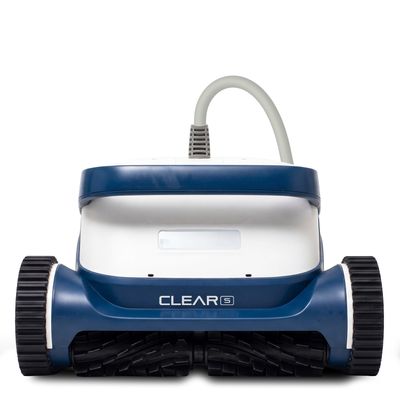
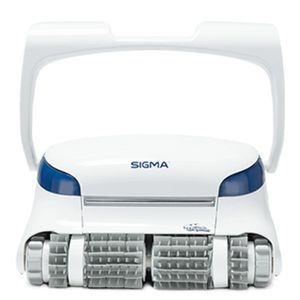
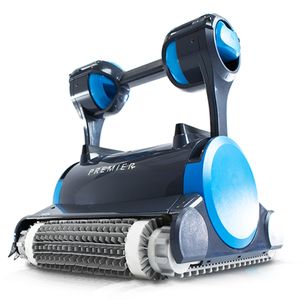
A robot working at the end of a taut cable misses the corners and the strip beneath the end walls, cycle after cycle. Two positions are the only way to bring those areas within reach. The Quantum shares the 50 ft rating but has the shortest cycle of the Dolphins in that group, so we leave it off. The Cayman and Escape are rated to 33 ft and are not options at this length.
Two-Zone Cleaning, Honestly Described
Think of the pool as two overlapping zones, each about 35 ft long. Plan on four to six hours of machine time for both, depending on the robot and mode, and someone on hand to make the move. Coverage will not be complete: the robot does not know where a zone ends, so some floor is cleaned twice and some corners hardly at all. The routine looks like this:
- Place the power supply beside the long side, about a quarter of the pool's length from one end, set back as the manual requires.
- Run a full cycle. The robot covers that half and wanders some distance into the other.
- Lift the robot out, rinse the filter, and move the power supply to the matching spot toward the other end.
- Run a second cycle. Check the middle of the pool and both far corners afterward, and brush anything left behind.
What to Tell Us for a Commercial Recommendation
A commercial-class robot, with a cable of 100 ft or more and a cycle planned for a long pool, cleans a 65-foot pool from one position without anyone standing by. For a club, hotel, school or any pool with daily swimmers, that is the purchase we recommend, and it starts with a conversation. Chat with a pool expert and include:
- Length, width and the depth at each end.
- The surface: plaster, tile, vinyl, fiberglass or pebble.
- How many hours a day the pool is in use, and when it can be cleaned.
- Where power is available along the deck, and where the robot will be stored.
Tips if You Run a Residential Robot in the Meantime
- Mark your two power supply positions on the deck so every clean starts from the same spots and you can compare results.
- Skim the surface and empty the skimmer baskets first. A pool this wide collects floating debris that will sink onto a floor you just cleaned.
- Rinse the filter between zones. Starting the second half with a loaded filter cuts flow just where you need it.
- Carry the robot by its handle, never by the cable, and use a caddy for the trip between zones.